The Impact of Synthetic Progestins on Cervical Remodeling and Local Immunological Homeostasis
This article explores the intricate relationship between synthetic progestins and cervical health, detailing how these hormonal compounds alter the structural integrity of the cervix and disrupt the local immune environment, with implications for long-term reproductive wellness.

# The Impact of Synthetic Progestins on Cervical Remodeling and Local Immunological Homeostasis\n\n## The Dual Mandate of the Cervical Barrier\n\nThe cervix is a complex anatomical structure that must balance two diametrically opposed roles: remaining firm and closed to protect a developing fetus or the internal reproductive environment, and undergoing rapid, controlled remodeling to allow for menstruation, sperm transport, or childbirth. This delicate balance is maintained through a sophisticated interplay of hormones, primarily estrogen and progesterone. However, in the modern landscape of reproductive health, the introduction of synthetic progestins—compounds designed to mimic progesterone—has introduced new variables into this biological equation. At INNERSTANDING, we look at the root causes of cervical health disruptions, specifically focusing on how these synthetic agents influence tissue structure and immune defense.\n\n## Deciphering Synthetic Progestins vs. Natural Progesterone\n\nTo understand the impact, we must first distinguish between endogenous progesterone and synthetic progestins.
Endogenous progesterone is a C-21 steroid hormone that binds with high specificity to progesterone receptors (PR-A and PR-B). Synthetic progestins, such as medroxyprogesterone acetate (MPA), norethisterone, and levonorgestrel, are chemically modified to enhance oral bioavailability and extend half-life. These modifications, however, often lead to cross-reactivity with other steroid receptors, including the glucocorticoid, androgen, and mineralocorticoid receptors. This "molecular promiscuity" is the primary reason why synthetic progestins can elicit vastly different responses in cervical tissue compared to the body’s natural hormone. For instance, whereas natural progesterone generally has a stabilizing effect on the cervical matrix, certain synthetic variants can mimic glucocorticoid activity, which may suppress immune responses or accelerate tissue breakdown.\n\n## Cervical Remodeling: The Structural Shift\n\nCervical remodeling is not a single event but a progressive change in the composition of the extracellular matrix (ECM).
The ECM is composed of collagen fibers, proteoglycans, and glycosaminoglycans (GAGs). Under the influence of natural progesterone, the cervix remains structurally sound by maintaining a dense network of cross-linked collagen. Synthetic progestins can disrupt this stability. Research suggests that certain progestins promote the expression of matrix metalloproteinases (MMPs), specifically MMP-1 and MMP-9. These enzymes are responsible for the degradation of collagen fibers.
When MMP activity is upregulated prematurely by synthetic agents, the cervix may undergo "softening" at inappropriate times, a process often referred to as premature cervical ripening. This has significant implications for cervical insufficiency and the risk of preterm birth in pregnant individuals. Furthermore, the loss of collagen density weakens the physical barrier that the cervix provides against ascending pathogens from the vaginal canal.\n\n## The Biochemical Shift: Hyaluronan and Hydration\n\nBeyond collagen, the concentration of hyaluronan (a GAG) plays a crucial role in cervical texture. Hyaluronan is highly hydrophilic; an increase in its concentration leads to increased tissue hydration and decreased structural rigidity. Synthetic progestins have been shown to modulate the synthesis of hyaluronan, potentially increasing its presence within the cervical stroma.
This biochemical shift alters the mechanical properties of the cervix, making it more susceptible to deformation. From a root-cause perspective, this alteration in the GAG-to-collagen ratio is a fundamental mechanism by which synthetic hormones can compromise the structural integrity of the reproductive tract. This "softening" is not merely a local physical change but a shift in the entire physiological environment of the lower uterus.\n\n## Immunological Homeostasis: The Guard at the Gate\n\nThe cervix is an active immunological site, acting as the first line of defense against ascending infections. It maintains a state of "immunological homeostasis" where it can tolerate sperm and beneficial microbes while remaining vigilant against pathogens. Synthetic progestins significantly alter this equilibrium.
Panaceum – Prebiotic Oligosaccharide Complex
Panaceum is a specialist eight-oligosaccharide blend designed to restore the microbial diversity missing from the modern Western diet. By providing the complex fibres our ancestors once consumed, it feeds and sustains a resilient gut microbiome for long-term health.
Vetting Notes
Pending
Unlike natural progesterone, which generally supports a balanced immune response, synthetic variants can be immunosuppressive. For instance, medroxyprogesterone acetate has been shown to decrease the production of key antimicrobial peptides and cytokines, such as interleukin-10 (IL-10) and secretory leukocyte protease inhibitor (SLPI). This suppression dampens the local immune system’s ability to clear infections, including high-risk strains of Human Papillomavirus (HPV). By weakening the local immune surveillance, synthetic progestins may indirectly contribute to the persistence of viral infections that can lead to cervical dysplasia.\n\n## T-Cell Modulation and Susceptibility\n\nThe distribution and function of T-cells within the cervical transformation zone—the area most susceptible to cellular changes—are also affected by hormonal inputs. Synthetic progestins can shift the balance between Th1 and Th2 immune responses, often favoring a Th2-dominant environment that is less effective at neutralizing viral and intracellular threats.
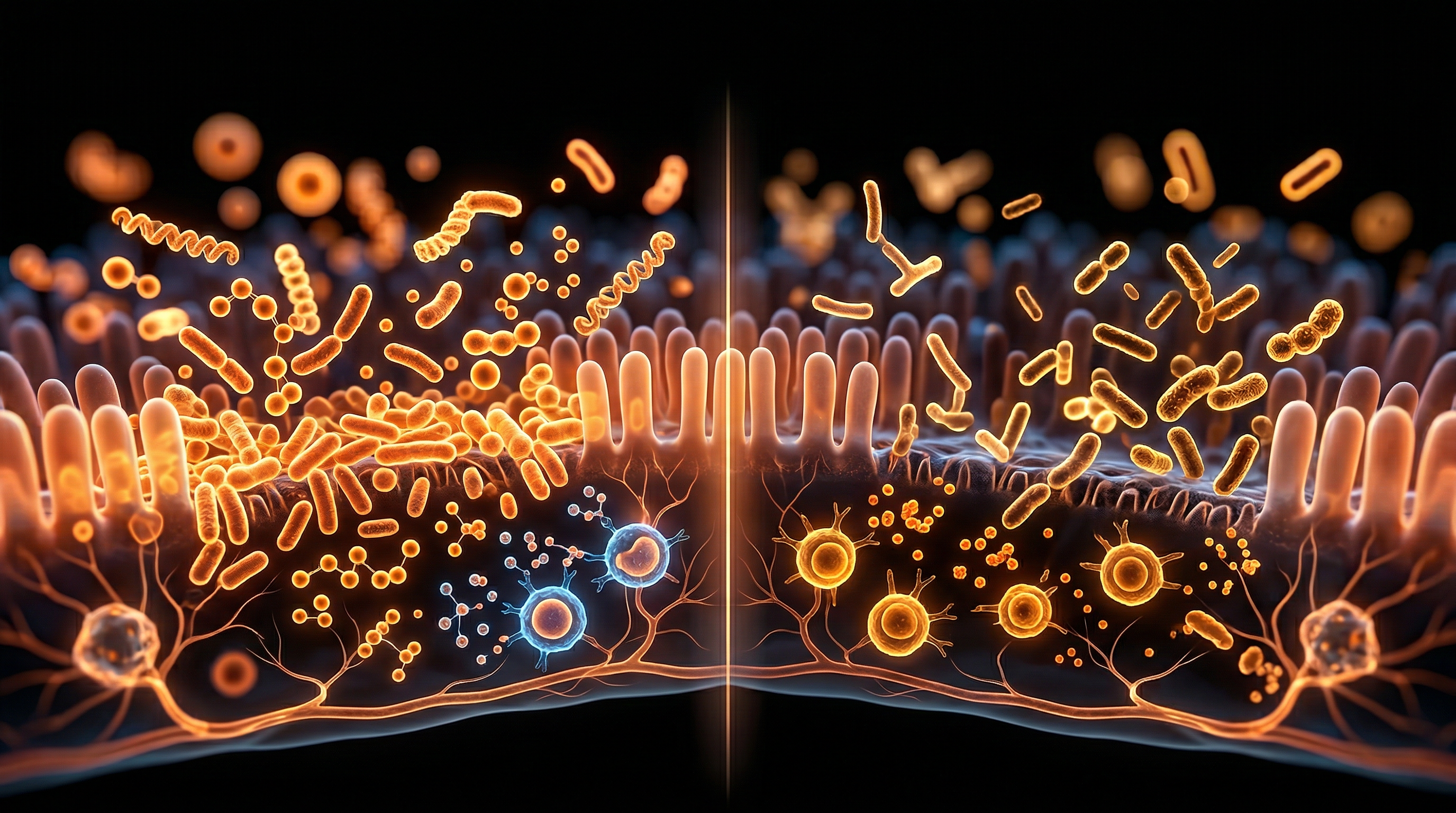
Furthermore, certain progestins increase the density of CCR5+ T-cells in the cervical mucosa. Since CCR5 is a primary co-receptor for HIV entry, this finding has sparked significant debate regarding the role of specific hormonal contraceptives in increasing the risk of HIV acquisition. This highlight the necessity of understanding how synthetic hormones don't just 'stop ovulation' but reorganize the entire immunological landscape of the cervix.\n\n## The Role of the Cervicovaginal Microbiome\n\nThe health of the cervix is inextricably linked to the vaginal microbiome. A healthy environment is characterized by a dominance of Lactobacillus species, which produce lactic acid to maintain a low pH and inhibit the growth of pathogens. Synthetic progestins can influence the amount and composition of cervical mucus, which serves as a nutrient source for these bacteria.
Disruptions in the hormonal milieu can lead to a decrease in glycogen availability, resulting in a shift away from Lactobacillus dominance toward a diverse array of anaerobic bacteria. This condition, known as bacterial vaginosis (BV), triggers local inflammation and further promotes cervical remodeling through the release of bacterial enzymes that degrade the protective mucosal barrier. This creates a feedback loop where hormonal imbalance leads to dysbiosis, which then accelerates structural breakdown of the cervix.\n\n## Epithelial Integrity and Barrier Function\n\nThe physical integrity of the cervical epithelium is maintained by tight junctions and adherens junctions. These proteins ensure that the cells are closely packed, preventing the passage of pathogens into the underlying tissue. High doses of certain synthetic progestins have been linked to a "thinning" of the squamous epithelium and a reduction in the expression of these junctional proteins.
This increased permeability not only facilitates infection but also allows for the deeper penetration of inflammatory markers, creating a cycle of chronic irritation and potential cellular changes. By examining these factors, we can see that the impact of progestins is multi-layered, affecting the macroscopic structure, the microscopic cellular junctions, and the biochemical signaling pathways simultaneously.\n\n## Conclusion: Toward Informed Cervical Health\n\nAt INNERSTANDING, we believe in providing the educational foundation for informed healthcare decisions. Recognizing the impact of synthetic progestins on cervical remodeling and immunological homeostasis is not about demonizing medical interventions, but about understanding the systemic effects of exogenous hormones. The differences between natural progesterone and synthetic progestins are clinically significant, particularly regarding their effects on the extracellular matrix and local immunity. For individuals navigating their hormonal health, being aware of these mechanisms allows for more nuanced conversations with healthcare providers and a more proactive approach to maintaining cervical integrity.
By focusing on the root causes of cervical changes—ranging from molecular receptor binding to microbiome shifts—we can develop more personalized and effective strategies for long-term reproductive and immunological wellness.
This article is provided for informational and educational purposes only. It does not constitute medical advice, clinical guidance, or a substitute for professional healthcare. Information reflects cited research at time of publication. Always consult a qualified healthcare professional before acting on any health information.
RESEARCH FOUNDATIONS
Biological Credibility Archive
Citations provided for educational reference. Verify via PubMed or institutional databases.
Medical Disclaimer
The information in this article is for educational purposes only and does not constitute medical advice, diagnosis, or treatment. Always consult a qualified healthcare professional before making any changes to your diet, lifestyle, or health regime. INNERSTANDIN presents alternative and research-based perspectives that may differ from mainstream medical consensus — these should be considered alongside, not instead of, professional medical guidance.
Read Full DisclaimerReady to learn more?
Continue your journey through our classified biological research.
DISCUSSION ROOM
Members of THE COLLECTIVE discussing "The Impact of Synthetic Progestins on Cervical Remodeling and Local Immunological Homeostasis"
SILENT CHANNEL
Be the first to discuss this article. Your insight could help others understand these biological concepts deeper.
THE ARSENAL
Based on Cervical Health & Hormonal Influence — products curated by our research team for educational relevance and biological support.
Panaceum – Prebiotic Oligosaccharide Complex
Magnesium Blend – The Most Important Mineral
Clean Slate – Detoxes thousands of chemicals,heavy metals, pesticides, allergens, mold spores and fungus
INNERSTANDING may earn a commission on purchases made through these links. All products are selected based on rigorous educational relevance to our biological research.
RABBIT HOLE
Follow the biological thread deeper