
The Microbiome Gap: C-Section Delivery and Immunological Risk
Updated May 2026
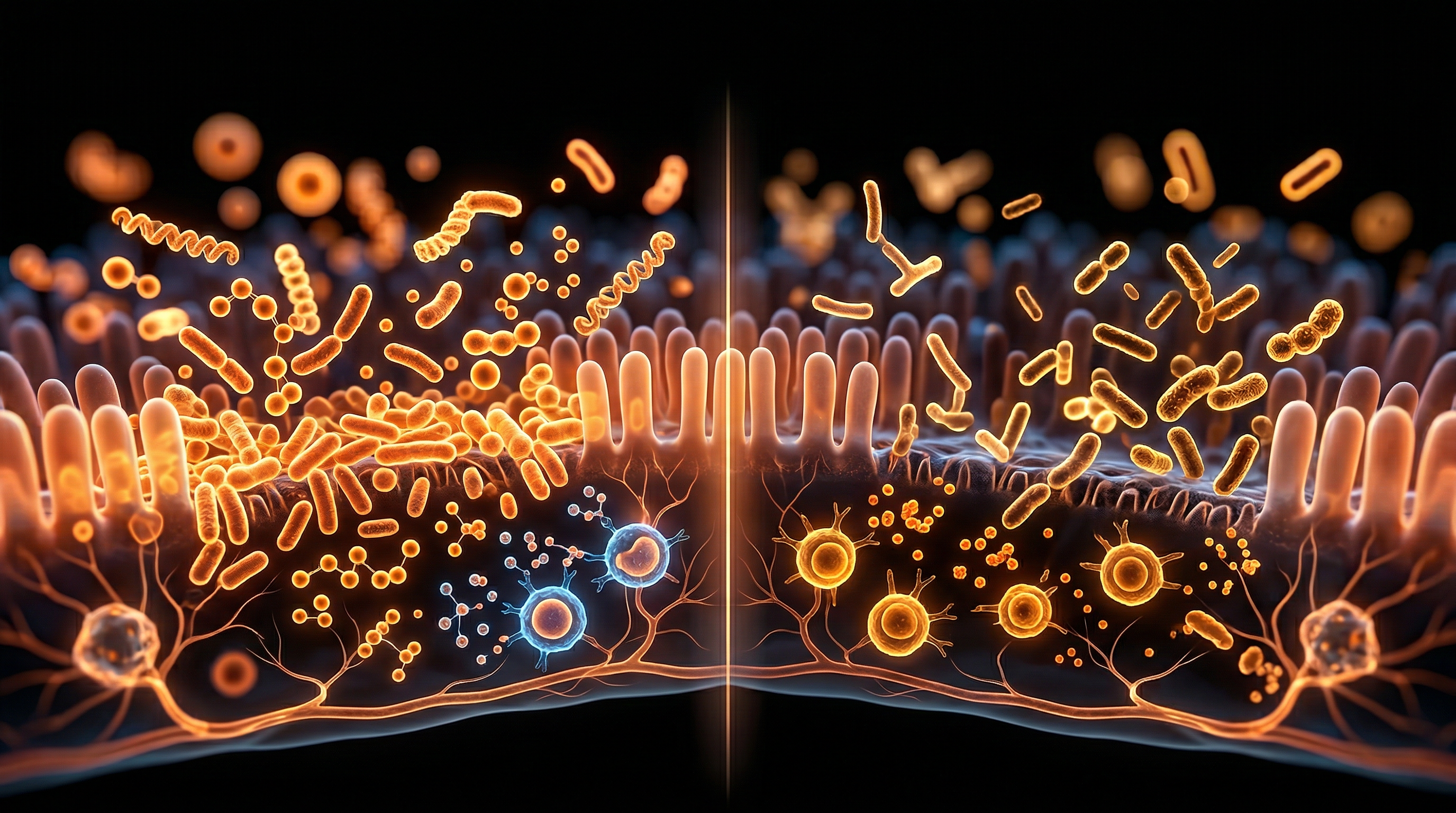
Delivery by Caesarean section bypasses the vaginal microbiome seeding necessary for infant immune development. This shift is linked to higher rates of asthma and allergies in the UK.
Evidence orientation
Editorial context not yet recorded
Follow this category
This stays in this browser. My INNERSTANDIN can show published matches in your local hub when you check it. It does not send email, push, or alert notifications.
Local learning review
A private browser aid for revisiting ideas. It is not an alert or a health recommendation.
Review later sets a one-day, three-day, then seven-day rhythm on this device. Choose it only when you want to revisit this article.
Overview
The arrival of a human infant was, for millennia, a biological event governed by a precise evolutionary choreography. This process—the passage through the vaginal canal—is far more than a physical exit; it is a critical "biological handover" where the mother bequeaths her microbial legacy to the next generation. However, in the modern era, this ancient continuity has been severed. The rapid rise of Caesarean section (C-section) deliveries, particularly across the United Kingdom and the Western world, has created what researchers now term "The Microbiome Gap."
As a senior biological researcher at INNERSTANDING, I have observed the mounting evidence that this gap is not merely a statistical curiosity but a foundational catalyst for the modern epidemic of non-communicable diseases (NCDs). By bypassing the vaginal canal, the infant is deprived of the essential inoculum—the first draught of "foundational bacteria"—required to prime the neonatal immune system. In its place, the infant’s virgin gut is colonised by opportunistic hospital pathogens and skin-borne microbes.
The implications are profound. This microbial "miss-seeding" creates a state of early-life dysbiosis that fundamentally alters the trajectory of immunological development. We are witnessing a systemic shift: a generation of children whose immune systems are poorly calibrated, leading to an explosion in paediatric asthma, allergic rhinitis, Type 1 diabetes, and metabolic disorders. This article serves as an exhaustive examination of the mechanics of this disruption, the cellular consequences of the missing microbes, and the truths that the medical establishment remains hesitant to fully acknowledge.
The Biology — How It Works
To understand the Microbiome Gap, one must first appreciate the concept of Vertical Transmission. For millions of years, the mammalian birth process has ensured that the first microbes an infant encounters are those that have co-evolved with the human species to perform specific metabolic and immunological functions.
The Microbial Inoculum
During a vaginal delivery, the infant is exposed to an intense cocktail of maternal vaginal and faecal microbiota. This is not an accidental contamination; it is a deliberate biological event. The primary colonisers are typically Lactobacillus, Prevotella, and Sneathia. As the infant passes through the birth canal, these microbes enter the mouth, nose, and skin, eventually making their way to the sterile gastrointestinal tract.
Key Fact: The vaginal microbiome undergoes a dramatic shift during pregnancy, specifically increasing the concentration of Lactobacillus species to prepare for this "seeding" event.
The C-Section Deviation
In a C-section delivery, this vertical transmission is entirely bypassed. Instead of maternal vaginal flora, the infant’s first contact is with:
- The mother’s skin (Staphylococcus, Corynebacterium).
- The hospital environment (nosocomial pathogens like Enterococcus and Klebsiella).
- The gloved hands of medical staff.
This leads to a "Microbial Signature of the OR" (Operating Room). While a vaginally delivered infant’s gut is dominated by Bifidobacteria—the primary digesters of human milk oligosaccharides—a C-section infant’s gut often shows a profound lack of these beneficial microbes for months, or even years, after birth.
The "Old Friends" Hypothesis
The biology of birth rests on the Old Friends Hypothesis, which posits that humans rely on specific microbes to "train" our immune systems. These microbes have been present throughout our evolutionary history. When we remove the primary delivery mechanism (vaginal birth) and combine it with modern sanitisation, we leave the immune system in a state of "evolutionary mismatch." It is like a computer trying to run complex software (the human body) without ever having installed the initial operating system (the microbiome).
Mechanisms at the Cellular Level
The disruption of the microbiome is not a superficial change; it alters the very architecture of the immune system at the cellular and molecular levels. The first 1,000 days of life represent a "critical window" where the gut-associated lymphoid tissue (GALT) is programmed.
TLR Signalling and Pathogen Recognition
The gut is lined with Toll-Like Receptors (TLRs), which act as the "eyes" of the innate immune system. In a vaginally delivered infant, the early colonisation by Bifidobacterium and Bacteroides sends specific signals through TLR4 and TLR2. These signals teach the immune system to distinguish between "commensal" (friendly) bacteria and "pathogenic" (harmful) invaders.
In C-section infants, the lack of these early signals leads to a state of Immunological Ignorance. Without the correct microbial prompts, the infant's dendritic cells do not mature properly, leading to a failure in the development of T-regulatory (Treg) cells.
The Th1/Th2 Imbalance
One of the most significant cellular consequences of the Microbiome Gap is the distortion of the Th1/Th2 balance.
- Th1 cells are responsible for fighting intracellular pathogens (viruses and bacteria).
- Th2 cells are involved in the response to allergens and parasites.
Infants are born with a natural Th2 bias (to prevent the mother's immune system from rejecting the foetus). Vaginal microbes provide the necessary stimulus to "flip the switch" and increase Th1 activity. Without this stimulus, the C-section infant remains stuck in a Th2-dominant state, which is the hallmark of allergic disease and asthma.
Short-Chain Fatty Acids (SCFAs)
The "missing" microbes, particularly Bifidobacterium, are masters of fermentation. They consume human milk oligosaccharides (HMOs) and produce Short-Chain Fatty Acids (SCFAs) like butyrate, acetate, and propionate.
- Butyrate is the primary fuel for colonocytes (gut lining cells).
- Acetate travels to the bone marrow to influence the production of neutrophils.
- Propionate regulates systemic inflammation.
In C-section infants, the low levels of SCFA-producing bacteria mean that the gut lining is often more permeable ("leaky gut"), and systemic inflammation is higher. This lack of SCFAs also impacts the Gut-Lung Axis, explain why these infants are more prone to respiratory distress later in life.
Statistic: Research indicates that C-section born infants have significantly lower levels of faecal acetate and butyrate at three months of age compared to vaginally born peers.
Environmental Threats and Biological Disruptors
The C-section itself is rarely an isolated event. It is usually part of a "cascade of interventions" that further degrades the neonatal microbiome.
The Antibiotic Double-Hit
Almost all women undergoing a C-section in the UK are administered prophylactic antibiotics to prevent surgical site infections. These antibiotics cross the placenta or are present in the environment during birth. This creates a "double-hit":
- The infant is not seeded with the mother's microbes.
- Any microbes the infant does manage to pick up are immediately challenged by broad-spectrum antibiotics.
This significantly delays the colonisation of Bacteroidetes, a phylum essential for metabolic health.
The Sterile Environment of the Operating Theatre
Modern hospitals are designed to be "sterile," but in reality, they are reservoirs for antibiotic-resistant bacteria. Because the infant's gut is a "vacuum" (an unoccupied ecological niche), it is highly susceptible to colonisation by whatever is in the immediate vicinity. In a sterile OR, the dominant life forms are often skin-derived Staphylococci or the highly resilient Enterococcus faecalis, which have no business being the primary colonisers of a human gut.
Formula Feeding Interference
While many C-section mothers successfully breastfeed, the physical recovery from surgery and the delay in "milk coming in" (lactogenesis II) often lead to early supplementation with infant formula. Formula lacks the complex HMOs found in breast milk that selectively feed beneficial Bifidobacteria. This further starves the "good" bacteria, allowing the "bad" bacteria (Proteobacteria) to flourish.
- Nosocomial Pathogens: Bacteria found in hospitals that are often multidrug-resistant.
- Microbial Succession: The orderly process by which different bacterial species inhabit the gut over time. C-sections disrupt this orderly succession.
The Cascade: From Exposure to Disease
The disruption of the microbiome at birth initiates a "slow-motion" health crisis that manifests throughout childhood and into adulthood. The scientific literature is now crystalline on the link between C-section delivery and specific immunological pathologies.
1. The Asthma Link
The UK has some of the highest rates of childhood asthma in the world. Large-scale epidemiological studies, including the UK Millennium Cohort Study, have shown a 20-30% increased risk of asthma in children born by C-section. The mechanism is the Gut-Lung Axis: the lack of early microbial diversity prevents the "tuning" of the lungs' immune response, leading to hyper-reactivity to common dust or pollen.
2. Atopic Dermatitis (Eczema) and Allergies
The "leaky" gut environment found in dysbiotic C-section infants allows undigested proteins and environmental toxins to cross the epithelial barrier. This triggers a systemic Th2 response, manifesting as eczema.
Callout: Children born via C-section are 5 times more likely to develop allergic sensitivities to common triggers like eggs, milk, and peanuts by age two.
3. Type 1 Diabetes and Autoimmunity
The immune system's failure to distinguish "self" from "non-self" is rooted in early-life microbial training. Without the presence of Bacteroides—which help produce the molecules that stimulate the maturation of T-regulatory cells—the risk of autoimmune attacks on the pancreas (Type 1 Diabetes) increases.
4. Obesity and Metabolic Syndrome
The microbiome is a metabolic organ. C-section infants often show a higher ratio of Firmicutes to Bacteroidetes. This specific ratio is highly correlated with increased calorie extraction from food and systemic low-grade inflammation, both of which are precursors to childhood obesity.
What the Mainstream Narrative Omits
As a science writer, it is my duty to highlight the uncomfortable truths that are often glossed over in clinical guidelines and maternal health pamphlets. There is a systemic reluctance to discuss the "Microbiome Gap" for several reasons.
The Convenience Factor
The "industrialisation of birth" has turned labour into a managed event. Scheduled C-sections (elective) allow for hospital efficiency, staffing predictability, and higher billing rates in private healthcare settings. Discussing the long-term immunological risks of bypassing the vaginal canal complicates the "convenience" narrative.
The Illusion of "Vaginal Seeding"
In recent years, "vaginal seeding" (swabbing the infant with maternal vaginal fluids) has gained popularity. However, many medical bodies, including the Royal College of Obstetricians and Gynaecologists (RCOG), have been slow to support it, citing risks of infection (like Group B Strep). While caution is warranted, the absolute dismissal of this practice ignores the fact that we are currently conducting a massive, uncontrolled experiment on millions of infants by not replacing the lost microbes.
The Lack of Informed Consent
How many mothers in the UK are told, prior to an elective C-section, that their child may have a 25% higher risk of asthma? The "informed consent" process typically focuses on surgical risks (haemorrhage, infection) but almost never addresses the long-term biological cost of microbial deprivation.
The Commercialisation of the Cure
The pharmaceutical industry is well aware of the Microbiome Gap. Instead of promoting vaginal birth or natural seeding, there is a massive push to develop "Next-Generation Probiotics" and synthetic microbial "cocktails." The narrative is being shifted from prevention (natural birth) to commercial intervention (buying back the lost microbes).
The UK Context
The situation in the United Kingdom is particularly acute. The NHS is currently grappling with a "C-section crisis," with rates rising steadily over the last two decades.
NHS Statistics
In some UK hospital trusts, C-section rates have exceeded 35%, far above the World Health Organization’s (WHO) recommended ideal of 10-15%. This surge is driven by a combination of older maternal age, increased BMI in the population, and a defensive medical culture that fears litigation from natural birth complications.
- Postcode Lottery: Depending on where you live in the UK, your chance of having a C-section can vary by as much as 15%.
- The NICE Guidelines: While NICE (National Institute for Health and Care Excellence) provides guidelines for when a C-section is "clinically indicated," the "maternal request" clause has led to a significant increase in elective procedures without adequate discussion of the Microbiome Gap.
The UK "Asthma Capital" Status
The UK has the highest prevalence of asthma symptoms in children worldwide. When you overlay the map of C-section rates with the map of asthma prevalence, the correlation is impossible to ignore. British children are suffering from a lack of "microbial exposure" that starts in the delivery room.
UK Statistic: Approximately 1 in 11 children in the UK are currently receiving treatment for asthma. The economic burden on the NHS is estimated at over £1.1 billion per year.
Protective Measures and Recovery Protocols
For those for whom a C-section is a life-saving necessity, all is not lost. The "Microbiome Gap" can be narrowed, but it requires proactive, science-led intervention.
1. The Golden Hour and Skin-to-Skin
Immediate skin-to-skin contact (the "Golden Hour") is even more critical for C-section babies. It allows the mother’s skin microbiome—which, while not a replacement for vaginal flora, is still preferable to hospital bacteria—to begin colonising the infant.
2. Targeted Probiotics: Bifidobacterium infantis
Not all probiotics are created equal. For a C-section infant, the most critical strain is Bifidobacterium infantis (B. infantis). This specific strain is uniquely evolved to consume the complex sugars in breast milk and produce the acids necessary to lower the gut pH, making it inhospitable to pathogens.
3. The Power of Colostrum
C-section mothers should be given extra support to express colostrum. Colostrum is rich in antibodies (IgA) and prebiotics that act as a "fertilizer" for the nascent microbiome, helping to repair the damage caused by the lack of vaginal seeding.
4. Avoiding Unnecessary Antibiotics
Post-natal care should prioritise "microbial stewardship." If an infant is born via C-section, every effort should be made to avoid further antibiotic use in the first year of life unless absolutely essential, as their microbial foundation is already fragile.
5. Future Frontiers: Fecal Microbiota Transplantation (FMT)
Groundbreaking studies in Scandinavia have explored the use of "maternal faecal transplant" (a diluted amount of maternal stool administered in milk) for C-section infants. While this sounds extreme, the results showed that the infants' microbiomes were virtually indistinguishable from those born vaginally. This may be the future of "corrective seeding."
Summary: Key Takeaways
The Microbiome Gap is a silent crisis at the heart of modern perinatal health. The transition from the sterile environment of the womb to the microbe-rich world is a foundational event that dictates the lifelong health of the individual.
- The Displacement: C-sections replace essential maternal microbes (Bifidobacterium, Lactobacillus) with opportunistic hospital pathogens.
- The Cellular Cost: This shift results in a Th1/Th2 imbalance, reduced Treg cell production, and a lack of protective SCFAs.
- The Disease Link: There is a direct, causal-linked correlation between C-section delivery and the rise of asthma, allergies, and autoimmune conditions in the UK.
- The Industry Silence: The medical establishment often prioritises surgical convenience and "risk management" over the long-term immunological integrity of the child.
- The Path Forward: Recognition of this gap is the first step. Through targeted probiotics, skin-to-skin contact, and a reimagining of birth as a biological seeding event, we can begin to close the gap and protect the health of future generations.
The modern obsession with sterility and surgical precision has come at a high biological price. We must stop viewing birth as merely a mechanical process and start respecting it as the vital microbial legacy it truly is. The health of our children's immune systems depends on our willingness to acknowledge—and bridge—the Microbiome Gap.
This article is provided for informational and educational purposes only. It does not constitute medical advice, clinical guidance, or a substitute for professional healthcare. Information reflects cited research at time of publication. Always consult a qualified healthcare professional before acting on any health information.
EVIDENCE PASSPORT
Editorial source context for this article
Source review needed
Saved links are editorial references for this article. They may support specific claims rather than every sentence. Open and assess each source in context. This passport does not independently verify them.
Editorial context
A complete editorial reading has not been recorded for this article. Source links remain available for you to open and assess directly.
Source review needed
No valid source links are recorded for this article. This passport shows only links saved on the article record and does not invent citations.
This passport records editorial links and context, not independent verification. Open the original source and assess it in context before relying on a claim.
Medical Disclaimer
The information in this article is for educational purposes only and does not constitute medical advice, diagnosis, or treatment. Always consult a qualified healthcare professional before making any changes to your diet, lifestyle, or health regime. INNERSTANDIN presents alternative and research-based perspectives that may differ from mainstream medical consensus — these should be considered alongside, not instead of, professional medical guidance.
Read Full DisclaimerContinue the thread
Keep this question moving.
Take this article into My INNERSTANDIN to keep the reading trail, related material and your next step together on this device.
Explore this in the Body Map
See where this hits your biology. Interactive anatomy, threats, and protective protocols.
Dig deeper in the Library
Free, longform PDF volumes that go beyond headlines into mechanisms and references.