
The Mineral Connection: Why UK Hard Water is Often Misunderstood
Updated May 2026
Re-evaluates the bioavailability of minerals in the UK’s hard water regions. It contrasts inorganic mineral deposits with the bio-available ions required for structured water formation.
Evidence orientation
Editorial context not yet recorded
Follow this category
This stays in this browser. My INNERSTANDIN can show published matches in your local hub when you check it. It does not send email, push, or alert notifications.
Local learning review
A private browser aid for revisiting ideas. It is not an alert or a health recommendation.
Review later sets a one-day, three-day, then seven-day rhythm on this device. Choose it only when you want to revisit this article.
Overview
For decades, the public health narrative in the United Kingdom has maintained a simplistic, almost archaic view of our water supply. We are told that the "hardness" of our water—specifically in the South and East of England—is a nutritional boon, a natural supplement of calcium and magnesium delivered straight to our taps. However, as we peer through the lens of modern biophysics and structured water science, a far more complex and troubling reality emerges.
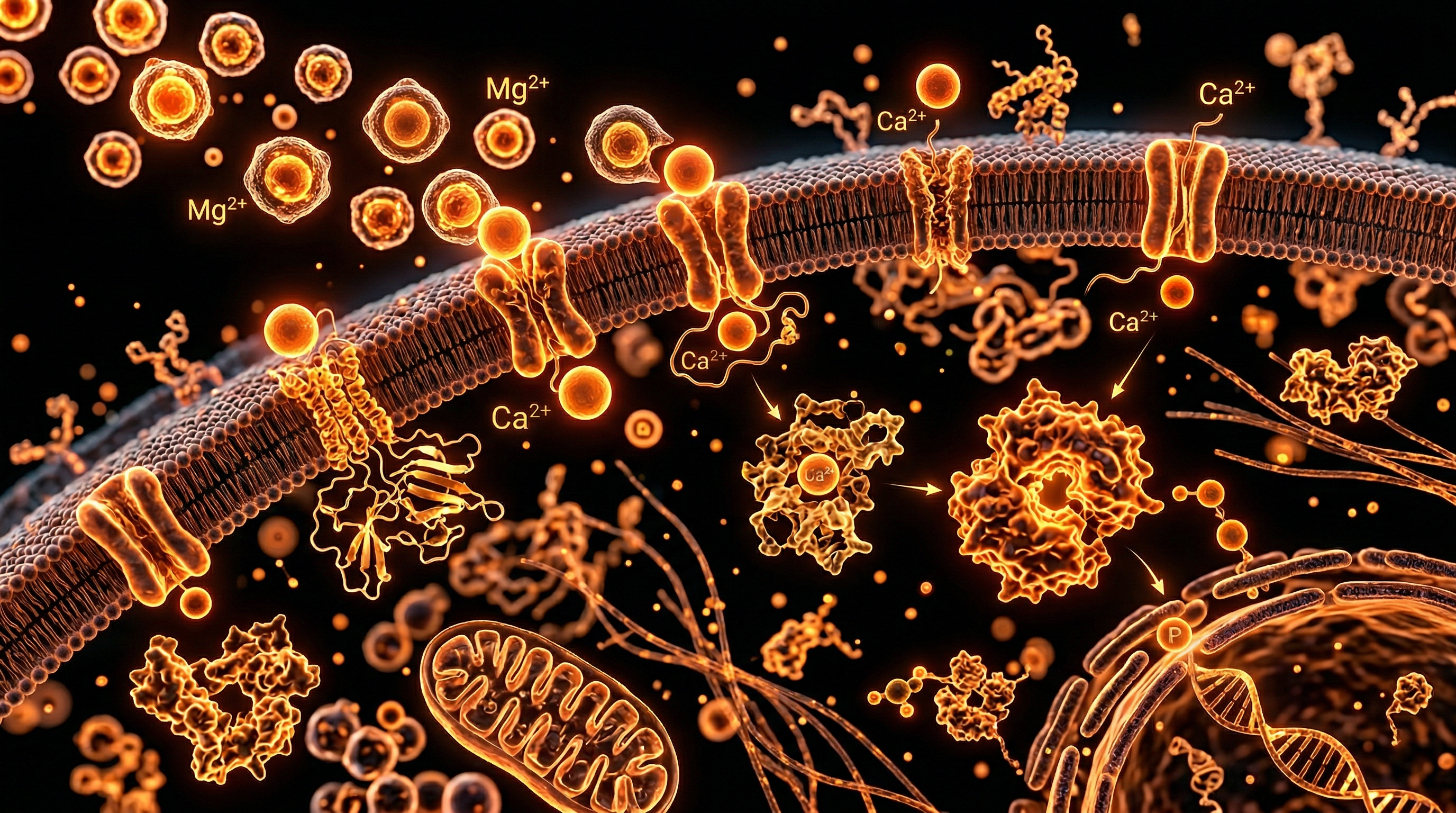
The "Mineral Connection" is not merely about the presence of elements; it is about their speciation, their bioavailability, and their impact on the liquid crystalline state of the human body. While the UK’s water authorities point to the mineral content of our "hard" water as a reason for its superiority over the "soft" water of the North and West, they ignore the fundamental distinction between inorganic mineral deposits and the bio-active ions required for cellular hydration.
Inland Britain, particularly the regions drawing from chalk and limestone aquifers, provides water that is saturated with calcium carbonate (limescale). To the uninformed, this looks like a source of bone-building material. To the biological researcher, it represents a significant challenge to the body's homeostatic mechanisms. We are witnessing a systemic misunderstanding of how water interacts with the human organism. True hydration is not the consumption of "wet rock"; it is the delivery of H2O in a structured state, supported by minerals in an ionic, organic-complexed form.
This article serves as a deep dive into the hidden mechanics of UK hard water. We will expose how inorganic mineral overload disrupts the Exclusion Zone (EZ) water within our cells, contributes to the "calcification cascade," and why the mainstream narrative regarding water hardness is fundamentally flawed.
Fact: Over 60% of the UK population lives in "hard" or "very hard" water areas, where calcium carbonate levels often exceed 200mg per litre, yet these regions do not show a proportional decrease in calcium-deficiency related diseases.
The Biology — How It Works
To understand why hard water minerals are often non-bioavailable, we must first distinguish between organic and inorganic minerals. This is a distinction rarely made in public health leaflets.
The Problem of Inorganic Salts
The minerals found in UK tap water—predominantly calcium carbonate and magnesium sulphate—are inorganic salts. They are essentially dissolved rock. In nature, the primary way humans are designed to ingest minerals is through plants. Plants perform a vital alchemical process: they take inorganic minerals from the soil, dissolve them through root exudates, and through photosynthesis, complex them with organic molecules (like amino acids or organic acids). This creates a chelated mineral that the human gut recognises and can transport across the intestinal wall via specific protein channels.
When we consume inorganic calcium carbonate from hard water, the bioavailability is notoriously low—often estimated at less than 5%. The remaining 95% does not simply vanish. It must be processed by the kidneys or, more dangerously, it remains in the bloodstream where it can contribute to the calcification of soft tissues.
Water as a Solvent vs. Water as a Structure
Mainstream biology treats water as a passive solvent, a mere "truck" that carries solutes. However, the emerging field of Structured Water Science (led by figures such as Dr. Gerald Pollack) reveals that water in the biological context is the Fourth Phase. Within our cells and surrounding our proteins, water exists in a gel-like, hexagonal lattice known as Exclusion Zone (EZ) water.
For this EZ layer to form, the water must be "ordered." Bio-available ions (like potassium and sodium in the correct ratios) act as templates for this structure. Conversely, an excess of coarse inorganic minerals disrupts this delicate crystalline lattice. Instead of supporting the cell's "battery" (the electrical potential across the membrane), hard water minerals can act as "biological grit," increasing the viscosity of the interstitial fluid and forcing the body to expend more energy to maintain cellular order.
The Role of the Gut Microbiome
Recent research suggests that the high mineral load in hard water may also alter the pH and microbial landscape of the gut. The British hard water supply is typically alkaline (pH 7.5 to 8.5) due to the carbonate content. While "alkaline water" is often marketed as a health product, the stomach requires an acidic environment (pH 1.5 to 3.5) for protein digestion and mineral ionisation. Constantly buffering stomach acid with high-carbonate hard water can lead to hypochlorhydria (low stomach acid), further reducing the absorption of the very minerals the water is supposed to provide.
Mechanisms at the Cellular Level
At the cellular level, the "Mineral Connection" becomes a question of electrodynamics. Every cell in the human body is a tiny battery, maintaining a negative charge on the interior and a positive charge on the exterior. This membrane potential is what drives the transport of nutrients in and waste products out.
Aquaporins and Molecular Filtering
Hydration is governed by aquaporins—microscopic channels in the cell membrane that allow water molecules to pass through one by one. These channels are highly selective. They are designed to pull in monomeric (single) water molecules. Hard water, due to its high mineral content and lack of structure, tends to form large molecular clusters. These clusters are too bulky to pass efficiently through aquaporins, leading to a state of extracellular hydration but intracellular dehydration. You can drink three litres of hard tap water a day and still have "thirsty" cells.
The Interference with EZ Formation
As mentioned, EZ water (ordered H3O2) forms on hydrophilic surfaces, such as our cell membranes and proteins. This layer excludes solutes—hence the name "Exclusion Zone." When we saturate our internal environment with inorganic calcium ions, we increase the osmotic pressure on these EZ layers.
- Disruption of Protein Folding: Proteins must be surrounded by a "hydration shell" of structured water to fold and function correctly. Excess inorganic minerals can strip this shell away, leading to misfolded proteins—a hallmark of neurodegenerative diseases.
- Mitochondrial Efficiency: The mitochondria, our cellular powerhouses, rely on a proton gradient. If the surrounding water is poorly structured and cluttered with inorganic debris, the efficiency of ATP (energy) production drops.
The Piezoelectric Effect
Our bones and connective tissues are piezoelectric, meaning they generate an electrical charge when under mechanical stress. This charge helps guide the placement of minerals. When we have a surplus of inorganic calcium (from hard water) and a deficiency in Vitamin K2 (which directs calcium to the bones), the body loses its "electrical map." The result is that calcium is deposited in the arteries and joints rather than the skeletal matrix.
Environmental Threats and Biological Disruptors
The UK's hard water does not exist in a vacuum. It is a delivery system for a cocktail of modern environmental pollutants that synergise with the mineral content to create a toxic "bio-sludge."
The Fluoride-Calcium Synergy
In many parts of the UK (such as the West Midlands and parts of the North East), fluoride is artificially added to the water. In other areas, it occurs naturally. Fluoride has a high affinity for calcium. When they meet in the water supply or the body, they form calcium fluoride (CaF2), an almost insoluble compound. This compound is a primary driver of pineal gland calcification. The pineal gland, responsible for melatonin production and circadian rhythm regulation, is outside the blood-brain barrier and is highly susceptible to accumulating these fluoride-calcium complexes.
Chlorine and Trihalomethanes (THMs)
To keep our aging Victorian pipework free of pathogens, the UK water industry uses heavy doses of chlorine. Chlorine is a powerful oxidant. When it reacts with the organic matter present in hard water sources (like river-fed reservoirs), it creates disinfection by-products (DBPs) such as Trihalomethanes. These are known carcinogens and endocrine disruptors. In hard water regions, the mineral scale inside pipes provides a porous surface where these chemicals and bacteria can linger, forming a "biofilm" that is resistant to standard flushing.
Microplastics and Nanoplastics
The UK’s water system is increasingly contaminated with microplastics. Research has shown that these particles can act as "nucleation sites" for mineral scaling. This means that instead of just "hard water," we are drinking a hybrid of limescale-coated plastic particles. These tiny complexes can bypass the gut barrier and enter the lymphatic system, causing systemic inflammation.
Warning: The presence of aluminium sulphate (used as a flocculant in UK water treatment) alongside hard water minerals can lead to the formation of aluminosilicates, which are linked to the development of amyloid plaques in the brain.
The Cascade: From Exposure to Disease
What happens when a population is exposed to inorganic mineral overload and poorly structured water for decades? We see a specific "cascade" of physiological decline that is often misdiagnosed as "normal aging."
Cardiovascular Calcification
The most significant risk of the UK's hard water obsession is atherosclerosis. The mainstream view is that "cholesterol" clogs arteries. However, advanced imaging shows that the real danger is calcified plaque. When the body cannot metabolise the inorganic calcium carbonate from tap water, it often ends up in the endothelial lining of the arteries. This turns flexible vessels into brittle tubes, increasing blood pressure and stroke risk.
Renal Stress and Lithiasis
The kidneys are the primary filters for our blood. Processing the high "ash content" of hard water puts immense strain on the nephrons. The UK has seen a steady rise in nephrolithiasis (kidney stones). These stones are almost exclusively composed of calcium oxalate or calcium phosphate. While dietary oxalates play a role, the constant influx of inorganic calcium from hard water provides the necessary substrate for stone formation.
Dermatological Disruption
The UK has some of the highest rates of eczema and psoriasis in Europe, particularly in children. Hard water is a major contributor.
- It strips the skin of its natural oils (sebum).
- The minerals react with soaps to form "scum" that clogs pores.
- It raises the skin's pH, disrupting the "acid mantle" and allowing pathogenic bacteria like Staphylococcus aureus to flourish.
The "Stiffening" of the Body
This is the "Calcium Paradox": people in hard water areas are often "calcified but osteoporotic." The calcium is in their joints (arthritis), their tendons (tendonitis), and their brain (dementia), but not in their bones. This leads to a general "stiffening" of the biological system—a loss of the fluidity and elasticity that defines youth.
What the Mainstream Narrative Omits
The UK’s Department for Environment, Food & Rural Affairs (DEFRA) and the NHS frequently cite a supposed link between hard water and reduced cardiovascular disease. This is based on epidemiological studies from the 1970s and 80s. However, when you dig into the data, the "benefit" is not from the calcium carbonate (the hardness), but from the trace magnesium and silica sometimes found in those same waters.
The Magnesium Deception
While hard water contains more magnesium than soft water, it is still in an inorganic form with poor bioavailability. Furthermore, the calcium-to-magnesium ratio in UK hard water is often wildly out of balance (sometimes as high as 10:1). For optimal health, the human body requires a ratio closer to 1:1 or 2:1. An excess of calcium actually antagonises magnesium, flushing it out of the cells. Since magnesium is required for over 300 enzymatic reactions, including those that keep the heart rhythm stable, "hard water" may actually be contributing to magnesium deficiency.
The Missing Silica
True "healing waters" or "structured waters" found in glacial runoff or deep artesian springs are often rich in orthosilicic acid (ionic silica). Silica is the "beauty mineral" and the structural antagonist to calcium. It keeps tissues supple and helps the body excrete aluminium. UK tap water, through its intensive treatment processes, is often stripped of this vital silica, leaving only the "heavy" minerals behind.
The Economics of Water
Why is there no push for better filtration or softening at the municipal level? The answer is infrastructure. Hard water is "self-healing" for old, leaky British pipes; the limescale coats the interior of the lead and copper pipes, preventing the metals from leaching into the water. If the water companies provided "soft" or "pure" water, they would have to replace thousands of miles of Victorian lead piping at a cost of billions. It is cheaper to let the British public act as the final "filter" for these minerals.
The UK Context
The geological map of the UK creates a "Great Water Divide." If you live in a line southeast of a boundary from the Tees to the Exe, you are almost certainly drinking Chalk Aquifer water.
The South and East: The Chalk Heartland
London, East Anglia, and the Home Counties sit atop massive chalk beds. This water is incredibly "stable" but also incredibly "dead." By the time it reaches a flat in London, it has been pumped, chemically treated, and pressured through miles of straight-line pipes. This destroys its natural vortexian structure. The result is water that is chemically "wet" but biologically "dry."
The North and West: The Soft Water Myth
While the North (Manchester, Liverpool, Scotland) has "soft" water from peatlands and reservoirs, it is not necessarily superior. This water is often highly acidic and aggressive, leaching metals like lead and copper from pipes. It also lacks the trace ionic minerals needed for proper hydration. Residents in these areas often suffer from "mineral washout" because the water acts as a "hungry" solvent, stripping minerals from the body.
The Infrastructure Crisis
The UK’s water privatised companies (like Thames Water, United Utilities, and Southern Water) are facing a crisis of underinvestment. Sewage spills are the headline, but the "silent" crisis is the chemical loading of the water supply. To deal with agricultural runoff in the East (nitrates and pesticides), more and more chemical coagulants are added, which interact with the hard water minerals to create increasingly complex chemical cocktails.
Protective Measures and Recovery Protocols
As residents of a hard-water nation, we cannot wait for a systemic change that may never come. We must take individual responsibility for the bio-geochemical signature of the water we consume.
Phase 1: Total Filtration
The first step is to remove the inorganic mineral load and chemical additives.
- Reverse Osmosis (RO): This is the most effective way to strip calcium carbonate, fluoride, and microplastics. However, RO water is "dead" and unstructured. It must be remediated.
- Distillation: Similar to RO, it removes everything. It is the "cleanest" slate but requires re-structuring.
- Avoid "Ion-Exchange" Softeners for Drinking: Most household water softeners replace calcium with sodium. While this is good for your boiler and skin, drinking high-sodium water is not ideal for cardiovascular health.
Phase 2: Re-Mineralisation with Bio-available Ions
Once you have "pure" water (0-10 PPM), you must add back the biological keys.
- Ionic Trace Minerals: Use concentrated sea minerals (with the sodium removed) or "Quinton" marine plasma. These provide minerals in the correct ratios and in an ionic state that the body can immediately use.
- Himalayan or Celtic Salt: A tiny pinch of high-quality salt adds over 80 trace minerals and helps create the "electrolyte" balance needed for EZ water formation.
Phase 3: Restructuring and Energising
Water is a dipolar molecule. It responds to its environment. To make water truly "structured":
- Vortexing: Use a magnetic stirrer or a vortexing jug to mimic the natural flow of a river. This helps erase the "memory" of the chemicals and increases dissolved oxygen.
- Infrared Light: Expose your water to sunlight or a red-light lamp. Infrared energy is the primary driver for the growth of the Exclusion Zone.
- Gemstones and Shungite: Adding Shungite (a carbon-based mineral from Russia) can help filter remaining impurities and impart "Fullerene" structures to the water, which are potent antioxidants.
Phase 4: Systemic Decalcification
If you have been drinking UK tap water for years, you likely have a "calcium debt."
- Vitamin K2 (MK-7): This is non-negotiable. K2 activates the proteins (MGP) that pull calcium out of the arteries and put it into the bones.
- Magnesium Bicarbonate: This is the most bio-available form of magnesium for decalcifying soft tissue.
- Apple Cider Vinegar/Citric Acid: These weak acids can help break down inorganic calcium deposits in the digestive tract.
Summary: Key Takeaways
The "Mineral Connection" reveals that the UK’s water crisis is not just one of pollution, but of fundamental biological misunderstanding.
- Inorganic vs. Organic: The calcium carbonate in hard water is "rock," not "food." It is poorly absorbed and contributes to the calcification of the heart, brain, and joints.
- Hydration is Structural: True hydration requires Structured (EZ) Water, which is disrupted by the high mineral and chemical load of tap water.
- The UK Geology Trap: The chalk aquifers of the South provide a water source that is stable for pipes but taxing for human kidneys and cells.
- The Synergy of Toxins: Fluoride and chlorine work alongside hard water minerals to create toxic complexes that target the pineal gland and the cardiovascular system.
- The Solution is Triple-Fold: You must Filter (remove the junk), Remineralise (add ionic trace minerals), and Structure (vortex or use IR light) to return water to its biological "living" state.
We must stop viewing water as a simple commodity and start viewing it as the primary information-carrier of the body. By changing the water we drink, we change the very environment in which our cells live, breathe, and communicate. It is time to move beyond the "hard water" myth and reclaim the fluidity of our health.
This article is provided for informational and educational purposes only. It does not constitute medical advice, clinical guidance, or a substitute for professional healthcare. Information reflects cited research at time of publication. Always consult a qualified healthcare professional before acting on any health information.
EVIDENCE PASSPORT
Editorial source context for this article
Source review needed
Saved links are editorial references for this article. They may support specific claims rather than every sentence. Open and assess each source in context. This passport does not independently verify them.
Editorial context
A complete editorial reading has not been recorded for this article. Source links remain available for you to open and assess directly.
Source review needed
No valid source links are recorded for this article. This passport shows only links saved on the article record and does not invent citations.
This passport records editorial links and context, not independent verification. Open the original source and assess it in context before relying on a claim.
Medical Disclaimer
The information in this article is for educational purposes only and does not constitute medical advice, diagnosis, or treatment. Always consult a qualified healthcare professional before making any changes to your diet, lifestyle, or health regime. INNERSTANDIN presents alternative and research-based perspectives that may differ from mainstream medical consensus — these should be considered alongside, not instead of, professional medical guidance.
Read Full DisclaimerContinue the thread
Keep this question moving.
Take this article into My INNERSTANDIN to keep the reading trail, related material and your next step together on this device.