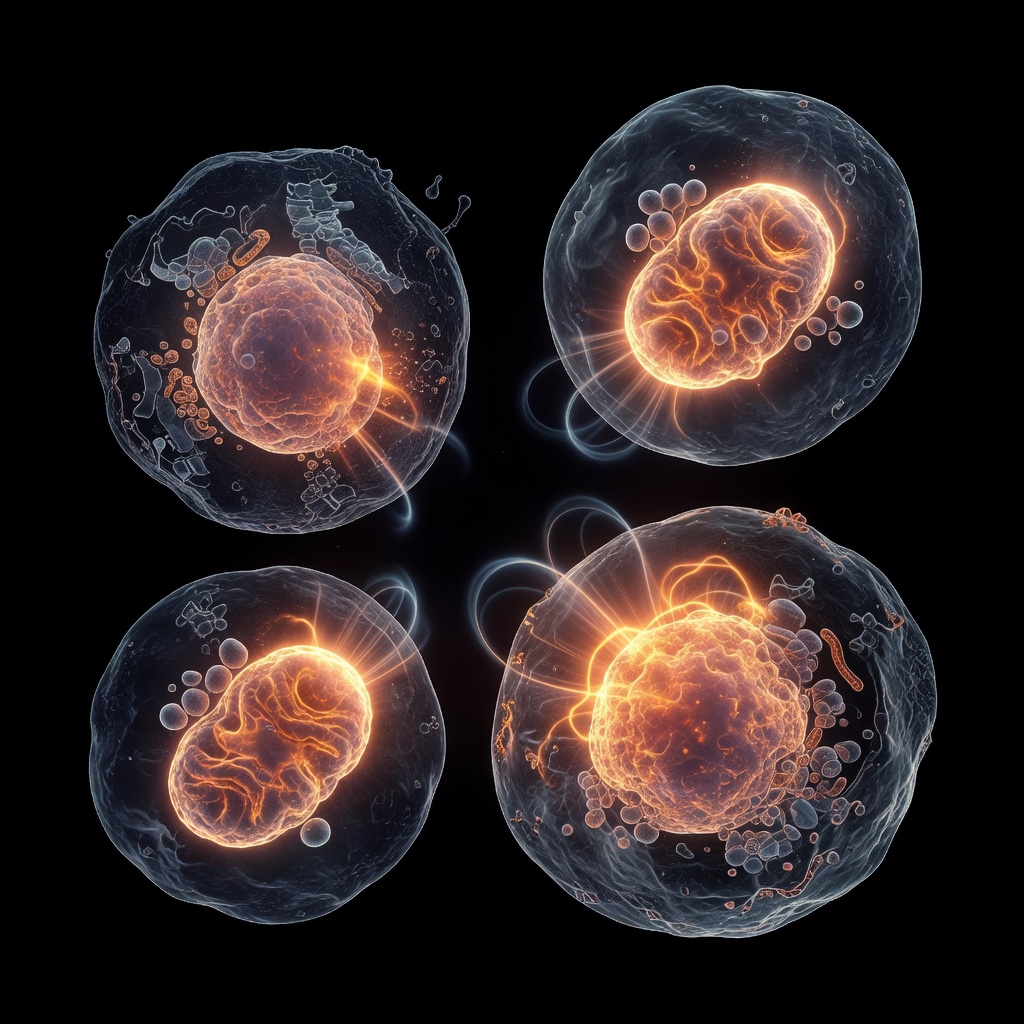
The Mitochondrial Gatekeeper: Understanding MOMP in Arsenic-Induced Hepatotoxicity
A comprehensive exploration of how arsenic exposure triggers Mitochondrial Outer Membrane Permeabilization (MOMP), a critical 'point of no return' in liver cell death and chronic hepatotoxicity.
# The Mitochondrial Gatekeeper: Understanding MOMP in Arsenic-Induced Hepatotoxicity
Arsenic is a naturally occurring metalloid and a significant global health threat, classified by the International Agency for Research on Cancer (IARC) as a Group 1 human carcinogen. While exposure can occur through various environmental routes, the most common source is contaminated groundwater, affecting millions of people worldwide, particularly in Southeast Asia and parts of South America. Within the human body, the liver stands as the primary target for arsenic metabolism and toxicity. As the central hub for biotransformation, the liver processes arsenic through a series of methylation reactions, a process that—while intended to facilitate excretion—often generates highly reactive intermediate metabolites.
At INNERSTANDING, we focus on the root causes of cellular dysfunction. To understand why arsenic is so damaging to the liver, we must look beyond the surface symptoms and examine the molecular events occurring within the mitochondria of hepatocytes. Specifically, we must investigate Mitochondrial Outer Membrane Permeabilization (MOMP), the decisive event in the intrinsic pathway of programmed cell death.
The Liver as a Target for Arsenic
The liver's vulnerability to arsenic is due to its high metabolic activity and its role in first-pass metabolism. When inorganic arsenic enters the hepatocyte, it is converted into trivalent (AsIII) and pentavalent (AsV) methylated species. While methylation was historically viewed as a detoxification pathway, we now know that trivalent methylated metabolites, such as monomethylarsonic acid (MMAIII), are often more toxic than their inorganic precursors. These metabolites accumulate in the liver, where they interfere with cellular respiration and antioxidant defenses, setting the stage for mitochondrial failure.

Methylene Blue – Advanced Cellular Chemistry
A pharmaceutical-grade compound designed to optimise mitochondrial function and cellular energy production. This high-purity formula supports metabolic efficiency and mental clarity by acting as a powerful electron donor within your cells.
Vetting Notes
Pending
Defining MOMP: The Point of No Return
Apoptosis, or programmed cell death, can be triggered through two main pathways: the extrinsic (death receptor) pathway and the intrinsic (mitochondrial) pathway. MOMP is the defining event of the intrinsic pathway. It refers to the process where the mitochondrial outer membrane becomes permeable, allowing the release of pro-apoptotic proteins from the intermembrane space into the cytosol.
In healthy cells, the mitochondria are the 'powerhouses,' maintaining an electrochemical gradient across their membranes to produce ATP. MOMP effectively terminates this function. Once MOMP occurs, it is generally considered the 'point of no return' for the cell; even if the downstream executioner enzymes (caspases) are inhibited, the loss of mitochondrial integrity usually leads to cell death through metabolic failure or 'caspase-independent' necrosis.
Arsenic-Induced Oxidative Stress and Mitochondrial Dysfunction
The primary mechanism by which arsenic triggers MOMP is the induction of oxidative stress. Arsenic has a high affinity for sulfhydryl (thiol) groups. By binding to these groups, arsenic inhibits various antioxidant enzymes, such as glutathione reductase and thioredoxin reductase, leading to a depletion of the cell’s antioxidant capacity. This results in a massive accumulation of Reactive Oxygen Species (ROS), including superoxide radicals and hydrogen peroxide.
These ROS directly attack the mitochondrial membranes and mitochondrial DNA (mtDNA). Furthermore, oxidative stress induces the opening of the Mitochondrial Permeability Transition Pore (mPTP). The mPTP is a high-conductance channel that spans both the inner and outer mitochondrial membranes. When it opens, it causes a sudden influx of water and solutes into the mitochondrial matrix, leading to mitochondrial swelling and, eventually, the physical rupture of the outer membrane—facilitating MOMP.
The Role of the Bcl-2 Family Proteins
While physical rupture via the mPTP is one route, MOMP is primarily regulated by the Bcl-2 family of proteins. This family is divided into pro-apoptotic members (like Bax and Bak) and anti-apoptotic members (like Bcl-2 and Bcl-xL). Under normal conditions, anti-apoptotic proteins sequester their pro-apoptotic counterparts, preventing them from damaging the mitochondria.
Arsenic disrupts this delicate balance. Exposure to arsenic stimulates the activation of JNK (c-Jun N-terminal kinase) and p53 signaling pathways. These pathways upregulate the expression of 'BH3-only' proteins, which act as sensors of cellular stress. These proteins inhibit the anti-apoptotic Bcl-2 proteins and directly activate Bax and Bak. Once activated, Bax and Bak undergo a conformational change and translocate to the mitochondrial outer membrane, where they oligomerize to form proteinaceous pores. These pores are the physical manifestation of MOMP, allowing mitochondrial contents to leak into the cytoplasm.
The Execution Phase: Cytochrome c and Caspases
Once MOMP has been achieved, the 'molecular alarm' is sounded. The most significant protein released during MOMP is Cytochrome c. In the intermembrane space, Cytochrome c is an essential component of the electron transport chain. However, once released into the cytosol, it takes on a lethal new role. It binds to a scaffolding protein called Apaf-1 (Apoptotic Protease Activating Factor-1) in the presence of dATP, forming a large, heptameric complex known as the apoptosome.
The apoptosome acts as a platform for the activation of Caspase-9, an initiator protease. Caspase-9, in turn, cleaves and activates executioner caspases, such as Caspase-3 and Caspase-7. These executioner caspases systematically dismantle the cell by cleaving structural proteins, degrading DNA, and causing the cell to shrink and fragment into apoptotic bodies, which are then cleared by resident macrophages (Kupffer cells in the liver) without triggering an inflammatory response.
Clinical Implications: From Apoptosis to Liver Disease
While apoptosis is a 'clean' way for the body to remove damaged cells, excessive arsenic-induced apoptosis through the MOMP pathway has severe clinical consequences. In the short term, the loss of hepatocytes leads to liver dysfunction and elevated liver enzymes (ALT/AST). Over time, the chronic loss of hepatocytes triggers compensatory proliferation and the activation of hepatic stellate cells. This leads to the deposition of collagen and the development of liver fibrosis and eventually cirrhosis.
Furthermore, because arsenic also damages mtDNA and interferes with DNA repair mechanisms, some cells may survive the initial apoptotic signaling but carry significant mutations. This creates a pro-carcinogenic environment, explaining the strong link between chronic arsenic exposure and hepatocellular carcinoma (HCC).
Conclusion: Therapeutic Targets and Future Outlook
Understanding the central role of MOMP in arsenic-induced hepatotoxicity provides a roadmap for potential therapeutic interventions. Research is currently exploring the use of mitochondrially-targeted antioxidants (such as MitoQ) and Bcl-2 mimetics to stabilize the mitochondrial membrane and prevent the 'pore formation' that characterizes MOMP. By identifying the root cause of cell death at the mitochondrial level, we can develop better strategies to mitigate the devastating effects of environmental arsenic exposure.
At INNERSTANDING, we believe that education is the first step toward protection. By understanding the molecular gatekeepers of our cells, like the mitochondrial outer membrane, we gain a deeper appreciation for the complex systems that maintain our health and the precise ways in which environmental toxins can undermine them.
This article is provided for informational and educational purposes only. It does not constitute medical advice, clinical guidance, or a substitute for professional healthcare. Information reflects cited research at time of publication. Always consult a qualified healthcare professional before acting on any health information.
RESEARCH FOUNDATIONS
Biological Credibility Archive
Citations provided for educational reference. Verify via PubMed or institutional databases.
Medical Disclaimer
The information in this article is for educational purposes only and does not constitute medical advice, diagnosis, or treatment. Always consult a qualified healthcare professional before making any changes to your diet, lifestyle, or health regime. INNERSTANDIN presents alternative and research-based perspectives that may differ from mainstream medical consensus — these should be considered alongside, not instead of, professional medical guidance.
Read Full DisclaimerReady to learn more?
Continue your journey through our classified biological research.
THE ARSENAL
Based on Apoptosis & Cellular Death Mechanisms — products curated by our research team for educational relevance and biological support.
Methylene Blue – Advanced Cellular Chemistry

Fulvic Minerals – Natural Rare Earth Minerals. The essential trace elements missing from modern processed foods.

Energy Blend Supports
INNERSTANDING may earn a commission on purchases made through these links. All products are selected based on rigorous educational relevance to our biological research.
RABBIT HOLE
Follow the biological thread deeper