
Autophagy Activation: Cellular Strategies for Clearing Intracellular Debris
Updated May 2026
Understanding the body's natural recycling system and how to stimulate it to remove damaged proteins. We cover the roles of fasting and specific nutrients in inducing cellular cleanup.
Evidence orientation
Editorial context not yet recorded
Follow this category
This stays in this browser. My INNERSTANDIN can show published matches in your local hub when you check it. It does not send email, push, or alert notifications.
Local learning review
A private browser aid for revisiting ideas. It is not an alert or a health recommendation.
Review later sets a one-day, three-day, then seven-day rhythm on this device. Choose it only when you want to revisit this article.
Overview
In the current era of unprecedented biological challenges, the human organism finds itself besieged by an array of novel stressors that threaten the very core of cellular integrity. We are witnessing a quiet crisis of proteostasis—the homeostatic control of protein synthesis, folding, and degradation. At the heart of this crisis lies the accumulation of intracellular debris, most notably the persistent presence of exogenous proteins such as the SARS-CoV-2 spike protein, whether introduced via natural infection or synthetic mRNA technologies.
The biological imperative for survival has always relied on a sophisticated internal recycling mechanism known as autophagy. Derived from the Greek autóphagos, meaning "self-eating," this evolutionary conserved process is the cell's primary method for deconstructing damaged organelles, misfolded proteins, and invading pathogens. However, modern lifestyle interventions and specific environmental exposures have systematically suppressed this vital function, leading to a state of "cellular constipation" that manifests as chronic fatigue, neurological fog, and systemic inflammation.
This article serves as a deep dive into the molecular machinery of autophagy. We will explore how we can reactivate this dormant internal furnace to clear the "biological sludge" that defines post-viral syndromes and spike protein-related pathologies. We move beyond the superficial recommendations of mainstream health outlets to expose the biochemical pathways that allow for genuine cellular regeneration. To understand the cure, one must first understand the mechanism of the decay.
The Biology — How It Works
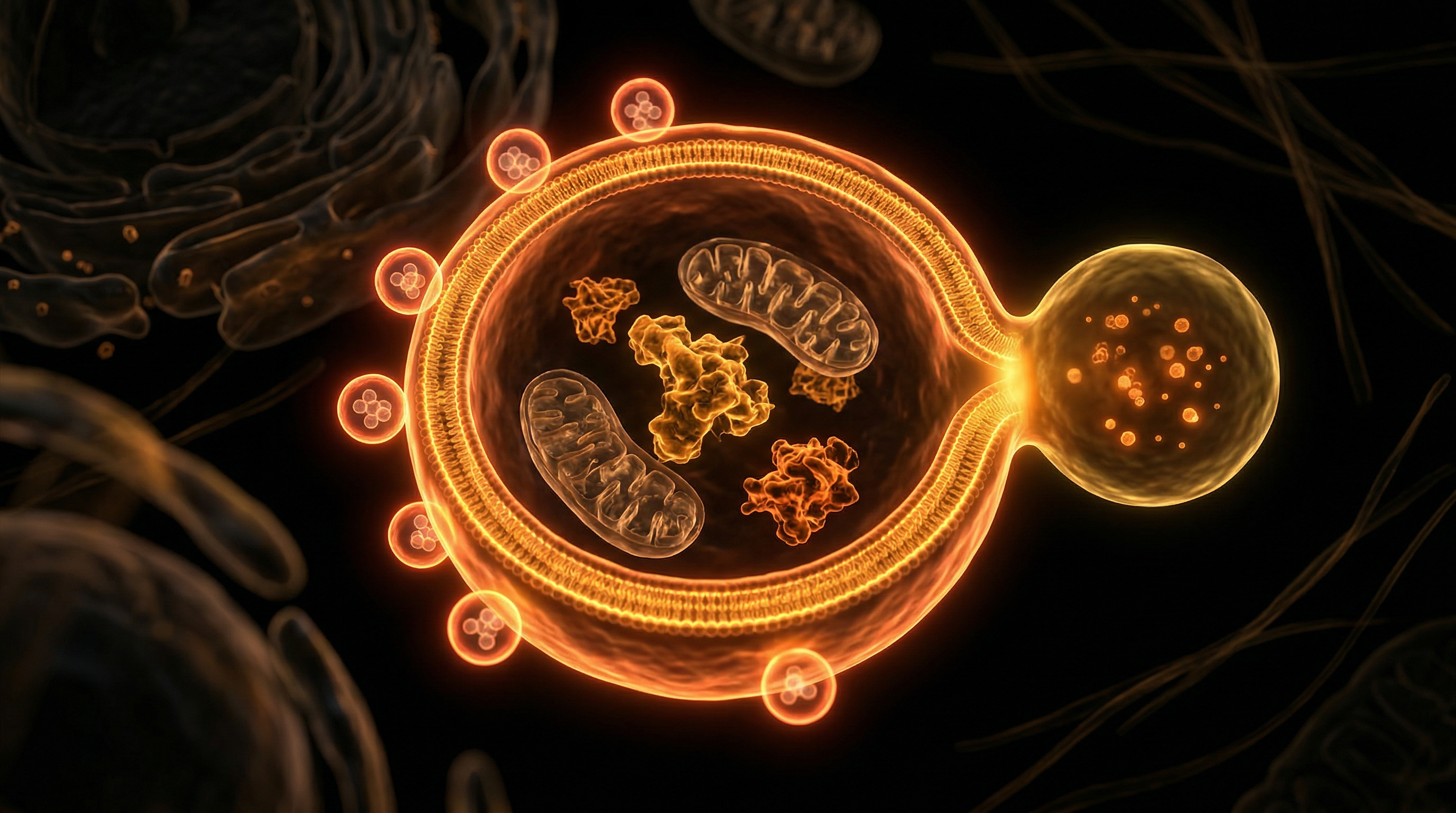
Autophagy is not a single event but a complex, highly regulated orchestral performance of enzymes and membranes. It is the cell's quality control department, ensuring that the "machinery" (organelles) and "products" (proteins) are functioning correctly. When the system detects a faulty component—be it a damaged mitochondrion (mitophagy) or a clump of aggregated proteins—it initiates a multi-stage reclamation project.
The process was first brought to global prominence by the work of Yoshinori Ohsumi, who was awarded the Nobel Prize in Physiology or Medicine in 2016. His research elucidated the genes responsible for autophagy (ATG genes), proving that this is a genetically programmed necessity, not a random occurrence.
Callout Fact: A healthy human body recycles approximately its own body weight in proteins every year through the process of autophagy and the ubiquitin-proteasome system.
The Three Modes of Autophagy
- Macroautophagy: This is the primary pathway. It involves the formation of a double-membrane structure called a phagophore, which expands to engulf cytoplasmic cargo, forming an autophagosome.
- Microautophagy: In this more direct route, the lysosome itself invaginates, directly "swallowing" small pieces of the cytoplasm.
- Chaperone-Mediated Autophagy (CMA): This is a highly selective process where specific "chaperone" proteins (like Hsc70) recognise a particular chemical signature on damaged proteins and ferry them directly to the lysosomal membrane for translocation and degradation.
The central goal of all three modes is to deliver cellular waste to the lysosome, an acidic organelle filled with hydrolytic enzymes. Once the waste is broken down into its constituent parts—amino acids, fatty acids, and simple sugars—these are released back into the cytoplasm to be reused for energy or the construction of new cellular components.
Mechanisms at the Cellular Level
To master the activation of autophagy, one must understand the metabolic "switches" that govern its initiation. The cell operates on a logic of abundance versus scarcity, mediated primarily by two opposing nutrient sensors: mTOR and AMPK.
The mTOR/AMPK Axis
mTOR (mammalian Target of Rapamycin) is the body's primary growth signal. When insulin and amino acids (especially leucine) are high, mTOR is activated. It signals the cell to build, grow, and divide. Critically, mTOR is a potent inhibitor of autophagy. As long as the cell believes it is in a land of plenty, it sees no reason to recycle its own parts.
Conversely, AMPK (Adenosine Monophosphate-activated Protein Kinase) is the "fuel gauge" of the cell. It becomes active when cellular energy (ATP) is low. AMPK acts as the master trigger for autophagy, directly inhibiting mTOR and phosphorylating the ULK1 complex, which initiates the formation of the phagophore.
The Role of Sirtuins
Another layer of control involves Sirtuins, specifically SIRT1. These are NAD+-dependent deacetylases that respond to cellular stress and caloric restriction. SIRT1 deacetylates various autophagy-related proteins, essentially "priming" them for action. This is why the availability of NAD+ is a critical rate-limiting factor in how effectively a cell can clean itself.
Autophagic Flux
It is not enough to simply start the process; the "flux" must be completed. Autophagic flux refers to the entire sequence from cargo sequestration to final degradation. In many disease states, particularly those involving the spike protein, the cell may initiate autophagy, but the fusion of the autophagosome with the lysosome is blocked. This leads to a dangerous accumulation of "trash bags" (autophagosomes) that the cell cannot empty, further contributing to cellular dysfunction and eventual apoptosis (programmed cell death).
Environmental Threats and Biological Disruptors
Why is the modern human's autophagic capacity so diminished? We live in an environment designed to keep us in a perpetual "state of growth," which is biochemically synonymous with a state of "no cleaning."
- Hyperinsulinemia: The Western diet, characterised by frequent grazing and high glycaemic carbohydrates, keeps insulin levels chronically elevated. This ensures that mTOR is never silenced and AMPK is rarely activated.
- Ultra-Processed Foods: Additives such as emulsifiers and synthetic flavourings can disrupt the lysosomal membrane, impairing the cell's ability to digest waste.
- The Spike Protein Paradox: Emerging evidence suggests that the SARS-CoV-2 spike protein behaves as a "stealth" protein. Its unique structure, particularly the presence of prion-like domains, makes it resistant to standard proteolytic degradation. There are concerns that the spike protein may actively interfere with the Sequestosome-1 (p62) pathway, a key adaptor protein that directs cargo to the autophagosome.
- Electromagnetic Fields (EMFs): Though often dismissed by mainstream science, some research indicates that excessive non-ionising radiation can disrupt voltage-gated calcium channels (VGCCs), leading to an influx of calcium that can prematurely trigger or dysregulate the autophagic response, leading to "burnout" of the system.
Callout Fact: Chronic inhibition of autophagy is a hallmark of almost all neurodegenerative diseases, including Alzheimer’s and Parkinson’s, where "plaques" and "tangles" are essentially un-recycled protein debris.
The Cascade: From Exposure to Disease
When autophagy fails, a predictable and devastating cascade ensues. This is particularly relevant in the context of Long Covid and post-vaccination syndromes, where the body struggles to clear the synthetic or viral instructions for protein production.
Step 1: Protein Aggregation
The persistent protein (e.g., the spike protein) begins to fold incorrectly. Because the autophagic "janitors" are off-duty, these misfolded proteins begin to clump together, forming oligomers.
Step 2: Mitochondrial Dysfunction
Damaged mitochondria that should have been cleared through mitophagy begin to leak Reactive Oxygen Species (ROS). This creates a state of oxidative stress that damages the cell's DNA and lipid membranes.
Step 3: The Inflammasome Activation
The cell recognises the accumulation of debris as a "Danger Associated Molecular Pattern" (DAMP). This activates the NLRP3 inflammasome, a multi-protein complex that triggers the release of highly inflammatory cytokines like IL-1β and IL-18. This is the "cytokine storm" in slow motion.
Step 4: Systemic Hypercoagulation
In the specific case of spike protein pathology, the debris doesn't stay inside the cell. It can interact with fibrinogen in the blood, leading to the formation of amyloid-like microclots. These clots are resistant to the body's natural clot-breaking mechanism (fibrinolysis) because the underlying protein structure hasn't been properly "recycled" at the cellular level.
What the Mainstream Narrative Omits
The suppression of autophagy as a therapeutic target is perhaps one of the greatest omissions in modern clinical medicine. The reasons for this are as much economic as they are scientific.
Mainstream protocols for post-viral syndromes largely focus on "symptom management"—prescribing anti-depressants for brain fog, beta-blockers for tachycardia, or NSAIDs for pain. These interventions do nothing to address the bio-accumulation of the offending proteins.
Furthermore, the most potent triggers for autophagy—fasting and caloric restriction—are entirely free. There is no "patentable" way to sell the absence of food. Consequently, the massive clinical trials required to bring "fasting-mimetic" protocols into the standard of care are rarely funded.
The narrative also conveniently ignores the xenophagic capability of the body. Xenophagy is a specific form of autophagy that targets intracellular pathogens (viruses, bacteria). By promoting a high-frequency eating culture, the "health" establishment has effectively disarmed the population's most potent innate defence against persistent viral elements.
Callout Fact: Pharmaceutical companies are currently racing to develop "autophagy-modulating" drugs. They seek to synthesise what the body already does naturally when denied glucose for 24 to 72 hours.
The UK Context
In the United Kingdom, the healthcare landscape presents a unique set of challenges for those seeking to optimise cellular health. The NHS, while a cornerstone of British society, is built upon a reactive, "acute-care" model. Its guidelines are notoriously slow to adapt to emerging molecular biology, particularly regarding the long-term effects of novel biotechnologies.
The "British diet"—increasingly dominated by high-street "grab-and-go" culture and ultra-processed meal deals—has led to a metabolic crisis. According to recent data, the UK has some of the highest rates of metabolic dysfunction in Europe. This provides a "fertile soil" for post-viral syndromes; when a population is already in a state of suppressed autophagy due to metabolic syndrome, their ability to clear a novel protein threat is significantly compromised.
Moreover, the UK’s regulatory environment has been hesitant to acknowledge the reality of "spike protein persistence," often labelling those suffering from these conditions with the catch-all term "Long Covid" without investigating the underlying proteinopathy. For the British citizen, recovery requires moving beyond the "GP-referral" loop and taking personal agency over their cellular "housekeeping."
Protective Measures and Recovery Protocols
To clear intracellular debris and restore cellular function, we must employ a multi-pronged strategy that shifts the body from an anabolic (building) state to a catabolic (cleansing) state.
1. The Fasting Framework
Fasting is the most powerful tool for inducing autophagy.
- Intermittent Fasting (18/6): Provides a daily "window" for maintenance.
- One Meal a Day (OMAD): Further suppresses insulin and begins to touch the edges of deeper autophagy.
- Extended Water Fasting (48–72 hours): This is the "gold standard" for clearing persistent proteins. After 48 hours, the growth hormone increases to preserve muscle, while the body aggressively targets misfolded proteins and damaged immune cells for fuel.
- Dry Fasting (Caution Required): Some researchers suggest that brief periods of dry fasting (no food or water) can accelerate autophagy by forcing the cell to produce "metabolic water," though this should only be done under expert supervision.
2. Autophagy-Mimetic Nutrients
Certain compounds can "trick" the cell into thinking it is fasting by modulating the AMPK/mTOR pathways.
- Spermidine: A polyamine found in aged cheese, mushrooms, and wheat germ. It directly triggers autophagy by inhibiting the acetyltransferase EP300.
- Resveratrol & Quercetin: These polyphenols activate Sirtuins (SIRT1), which then prime the autophagic machinery. Quercetin also acts as a senolytic, helping to clear "zombie" cells.
- EGCG (Green Tea Extract): Known to inhibit mTOR and support the degradation of autophagosomes.
- Luteolin: A flavonoid that can help cross the blood-brain barrier to initiate autophagy in the microglia, potentially clearing "brain fog."
3. Degrading the Spike Protein
Specifically for clearing the spike protein, we must look at proteolytic enzymes that can work systemically.
- Nattokinase: An enzyme derived from fermented soy (natto). In vitro studies have shown it can degrade the S1 subunit of the spike protein.
- Bromelain: Derived from pineapple stems, it has been shown in some studies to disrupt the spike protein's ability to bind to the ACE2 receptor and may aid in its breakdown.
- NAC (N-Acetyl Cysteine): Essential for replenishing Glutathione, the body’s master antioxidant. Glutathione protects the lysosomal membranes from being damaged by the very debris they are trying to digest.
4. Photobiomodulation and Heat Stress
- Sauna Therapy: Heat shock proteins (HSPs) are produced in response to sauna use. These proteins act as chaperones, ensuring that other proteins are folded correctly or marked for destruction if they are beyond repair.
- Red Light Therapy (660nm - 850nm): Stimulates the mitochondria (cytochrome c oxidase), increasing ATP production. This gives the cell the "energy" it needs to carry out the energy-intensive process of autophagy.
5. Pharmaceutical Interventions (The "Off-Label" Approach)
While Innerstanding focuses on natural strategies, certain molecules have shown remarkable autophagic potential. Ivermectin, for instance, has been identified in various studies as an autophagy inducer in certain contexts, potentially by inhibiting the Akt/mTOR pathway. Similarly, Hydroxychloroquine was historically used as an autophagy inhibitor in cancer research; however, its nuanced role in lysosomal pH suggests that its interaction with cellular cleaning is far more complex than mainstream narratives allow.
Summary: Key Takeaways
The path to recovery from modern proteinopathies lies not in a new "wonder drug," but in the reactivation of an ancient, internal survival mechanism. Autophagy is the body’s ultimate act of wisdom—knowing what to keep and what to burn.
- Autophagy is the cell’s internal recycling system, essential for clearing misfolded proteins like the spike protein.
- The mTOR pathway (growth) inhibits autophagy, while the AMPK pathway (energy-sensing) activates it.
- Modern lifestyles (constant eating, processed foods) keep us in a state of "autophagic arrest."
- Persistent proteins cause a cascade of mitochondrial failure, inflammation (NLRP3), and micro-clotting.
- Fasting (especially 48h+) is the most effective trigger for systemic cellular cleaning.
- Targeted supplements like Spermidine, Nattokinase, and Quercetin can support the degradation of specific toxic proteins.
- In the UK context, citizens must look beyond the standard NHS "wait and see" model to proactive, metabolic-based self-care.
By reclaiming our metabolic flexibility and intentionally inducing periods of cellular scarcity, we can purge the synthetic and viral debris that hampers our vitality. The body knows how to heal itself; we simply need to provide the environment for it to do so. In the struggle against intracellular "clutter," the most powerful action is often the decision to stop adding to the pile and let the internal furnace roar to life.
This article is provided for informational and educational purposes only. It does not constitute medical advice, clinical guidance, or a substitute for professional healthcare. Information reflects cited research at time of publication. Always consult a qualified healthcare professional before acting on any health information.
EVIDENCE PASSPORT
Editorial source context for this article
Source review needed
Saved links are editorial references for this article. They may support specific claims rather than every sentence. Open and assess each source in context. This passport does not independently verify them.
Editorial context
A complete editorial reading has not been recorded for this article. Source links remain available for you to open and assess directly.
Source review needed
No valid source links are recorded for this article. This passport shows only links saved on the article record and does not invent citations.
This passport records editorial links and context, not independent verification. Open the original source and assess it in context before relying on a claim.
Medical Disclaimer
The information in this article is for educational purposes only and does not constitute medical advice, diagnosis, or treatment. Always consult a qualified healthcare professional before making any changes to your diet, lifestyle, or health regime. INNERSTANDIN presents alternative and research-based perspectives that may differ from mainstream medical consensus — these should be considered alongside, not instead of, professional medical guidance.
Read Full DisclaimerContinue the thread
Keep this question moving.
Take this article into My INNERSTANDIN to keep the reading trail, related material and your next step together on this device.