
Autophagy and the Degradation of Lipid Droplets
Updated May 2026
Lipoautophagy is the cellular process of breaking down stored fat for energy. We examine how fasting and exercise trigger this mechanism to prevent lipid accumulation and metabolic disease.
Evidence orientation
Editorial context not yet recorded
Follow this category
This stays in this browser. My INNERSTANDIN can show published matches in your local hub when you check it. It does not send email, push, or alert notifications.
Local learning review
A private browser aid for revisiting ideas. It is not an alert or a health recommendation.
Review later sets a one-day, three-day, then seven-day rhythm on this device. Choose it only when you want to revisit this article.
Overview
In the realm of modern biological science, few mechanisms are as vital—and as frequently misunderstood—as autophagy. Derived from the Greek auto (self) and phagein (to eat), this process represents the body’s innate, evolutionary masterpiece of cellular renovation. While general autophagy involves the recycling of damaged proteins and organelles, a more specific, high-stakes sub-process has recently taken centre-stage in the fight against chronic illness: Lipophagy.
Lipophagy is the selective autophagic degradation of lipid droplets (LDs). For decades, lipid droplets were dismissed by biologists as inert "bags of fat"—passive storage depots for excess energy. We now know this was a catastrophic oversight. Lipid droplets are dynamic, sophisticated organelles that regulate lipid trafficking, metabolic signalling, and cellular homeostasis. When the machinery of lipophagy fails, the result is not merely "weight gain," but a systemic breakdown of cellular integrity.
At INNERSTANDING, we recognize that the current global epidemic of metabolic syndrome, obesity, and Non-Alcoholic Fatty Liver Disease (NAFLD)—recently renamed Metabolic Dysfunction-Associated Steatotic Liver Disease (MASLD)—is fundamentally a crisis of inhibited lipophagy. We live in an era of biological stagnation. By decoupling our lifestyles from the ancestral triggers of autophagy—namely fasting and physical exertion—we have silenced the cellular cleanup crew. This article serves as a comprehensive technical guide to the molecular mechanics of lipophagy and an urgent exposé on the environmental forces conspiring to keep your cells "clogged."
Key Fact: Lipophagy was only formally identified in 2009 by researchers at the Albert Einstein College of Medicine, revealing that the lysosome—long thought only to process proteins—is the primary engine for breaking down cellular fat stores.
The Biology — How It Works
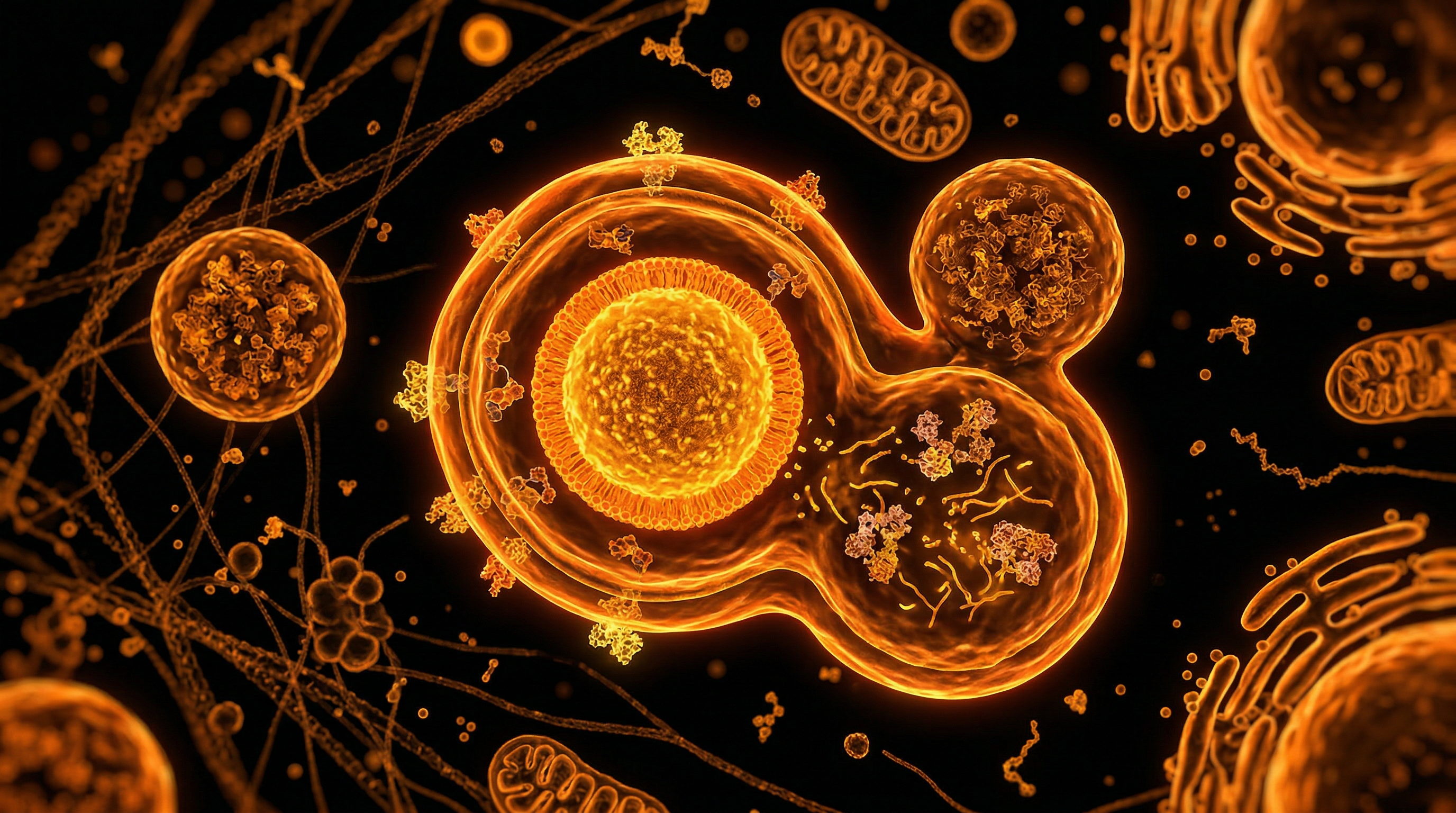
To understand lipophagy, one must first understand the Lipid Droplet (LD). These organelles consist of a core of neutral lipids—primarily triacylglycerols (TAGs) and sterol esters—surrounded by a phospholipid monolayer. This monolayer is studded with a complex array of proteins, most notably the Perilipin (PLIN) family, which act as gatekeepers, either protecting the fat core from degradation or inviting the machinery of breakdown.
The Dual Pathways of Fat Breakdown
The body possesses two primary methods for mobilising stored fat:
- Neutral Lipolysis: This occurs in the cytosol using enzymes like Adipose Triglyceride Lipase (ATGL). This is the "fast-response" system.
- Lipophagy (Macrolipophagy): This involves the sequestration of entire lipid droplets, or portions of them, into double-membraned vesicles called autophagosomes. These vesicles then fuse with lysosomes, where Acid Lysosomal Lipase (LAL) breaks the fat down into free fatty acids for energy production (beta-oxidation) in the mitochondria.
The Role of Metabolic Flexibility
The hallmark of a healthy biological system is metabolic flexibility: the ability to switch seamlessly between burning glucose (sugar) and lipids (fat). Lipophagy is the molecular bridge that facilitates this switch. During periods of nutrient scarcity (fasting), the cell initiates lipophagy to provide a steady stream of fatty acids to the mitochondria. In a state of chronic nutrient surplus—the "Western" default—this bridge is dismantled, leading to a state of permanent metabolic "lock-in" where the body cannot access its own energy reserves despite carrying them in abundance.
Mechanisms at the Cellular Level
The process of lipophagy is a choreographed sequence of molecular events requiring precision signalling and mechanical transport.
1. Initiation and Induction: The AMPK/mTOR Seesaw
The "master switch" of lipophagy is the balance between two nutrient-sensing enzymes:
- mTOR (mammalian Target of Rapamycin): The growth sensor. When insulin and amino acids are high (after eating), mTOR is active, effectively shutting down autophagy to focus on cellular building.
- AMPK (Adenosine Monophosphate-activated Protein Kinase): The energy sensor. When the cell’s energy currency (ATP) is low, AMPK activates, inhibiting mTOR and stimulating the ULK1 complex to begin the autophagic process.
2. Cargo Recognition and Sequestration
How does the cell know which lipid droplet to "eat"? This involves selective autophagy receptors.
- LC3 (Microtubule-associated protein 1 Light Chain 3): This protein is conjugated to the autophagosomal membrane. It acts as a docking hook.
- p62 (Sequestosome-1): An adaptor protein that binds to ubiquitinated proteins on the surface of lipid droplets and سپس links them to LC3, dragging the droplet into the forming autophagosome.
- Rab Proteins: Specifically Rab7, which helps coordinate the movement of the autophagosome toward the lysosome along the cellular "highway" of microtubules.
3. Fusion and Degradation
Once the autophagosome has trapped the lipid droplet, it fuses with a lysosome to form an autolysosome.
- The interior of the lysosome is highly acidic (pH ~4.5–5.0).
- Lysosomal Acid Lipase (LAL) is the "hero" enzyme here. It functions optimally in this acidic environment to hydrolyse triacylglycerols into free fatty acids and glycerol.
- These breakdown products are then transported back into the cytoplasm or directly into the mitochondria to fuel the TCA cycle and generate ATP.
4. Transcription Factor EB (TFEB)
Known as the "master regulator of lysosomal biogenesis," TFEB is a protein that, when activated by fasting or exercise, migrates to the nucleus and "turns on" the genes responsible for creating more lysosomes and autophagic machinery. Without TFEB activation, the cell lacks the "bins" necessary to clear the "trash."
Environmental Threats and Biological Disruptors
The reason we are witnessing a global collapse in metabolic health is not merely due to "laziness." Our cellular machinery is being actively sabotaged by environmental factors that arrest the lipophagy cycle.
The Rise of Obesogens
Obesogens are chemical compounds—often found in plastics, pesticides, and flame retardants—that disrupt normal lipid metabolism.
- Bisphenol A (BPA) and Phthalates: These endocrine disruptors mimic oestrogen and interfere with PPAR-gamma signalling, a primary regulator of fat cell development. They encourage the creation of new fat cells (adipogenesis) while simultaneously inhibiting the autophagic breakdown of existing ones.
- PFAS (Per- and Polyfluoroalkyl Substances): Known as "forever chemicals," these accumulate in the liver and interfere with the ability of the lysosome to process lipids, leading directly to hepatic steatosis.
Blue Light and Circadian Misalignment
Autophagy is governed by circadian rhythms. The genes that control lipophagy are expressed in a rhythmic, oscillatory fashion.
- Artificial blue light exposure at night suppresses melatonin and elevates nocturnal cortisol.
- This keeps the body in a pseudo-fed state, preventing the natural "nightly fast" that should trigger systemic autophagy. If you eat late and look at a screen, you are effectively turning off your cellular cleaning cycle for that 24-hour period.
Ultra-Processed Foods (UPFs) and Seed Oils
The modern diet is a "perfect storm" for lipophagy inhibition.
- Industrial Seed Oils (Linoleic Acid): High intake of omega-6 rich oils (soybean, sunflower, rapeseed) leads to the accumulation of lipid peroxides within the lipid droplets. These "rancid" fats are harder for the autophagic machinery to recognise and process, leading to "clogged" lysosomes.
- High-Fructose Corn Syrup (HFCS): Fructose is metabolised almost exclusively in the liver. It bypasses the normal energy-checkpoints of glycolysis, flooding the liver with substrate for de novo lipogenesis (fat creation) while simultaneously suppressing the AMPK activation needed for lipophagy.
The Cascade: From Exposure to Disease
When lipophagy is inhibited, the biological consequences follow a predictable and devastating cascade.
Stage 1: Ectopic Fat Accumulation
When the body can no longer clear lipid droplets within the liver, muscle, and pancreas through lipophagy, fat begins to store in these "non-professional" fat tissues. This is ectopic fat.
Stage 2: Lipotoxicity and ER Stress
Excessive lipid droplets that cannot be broken down begin to leak reactive oxygen species (ROS). This causes Endoplasmic Reticulum (ER) stress. The ER is responsible for protein folding; when it is stressed by excess lipids, it begins to produce misfolded proteins, further taxing the autophagic system.
Stage 3: The Pro-Inflammatory State (Meta-inflammation)
The immune system perceives these "clogged" cells and leaked lipids as "danger signals" (DAMPs). This triggers the NLRP3 inflammasome.
- Chronic low-grade inflammation becomes systemic.
- This inflammation drives Insulin Resistance, as inflammatory cytokines (like TNF-alpha) interfere with insulin receptor signalling.
Stage 4: End-Organ Failure
- MASLD (Liver): Accumulation of fat leads to fibrosis, then cirrhosis, and potentially hepatocellular carcinoma.
- Atherosclerosis (Arteries): Macrophages (immune cells) attempt to "eat" excess cholesterol in arterial walls via lipophagy. When their lipophagy mechanisms are overwhelmed, they turn into Foam Cells, which form the basis of arterial plaque.
- Neurodegeneration: The brain is the most lipid-rich organ. Failure of lipophagy in the microglia and neurons is now being linked to the plaque formation seen in Alzheimer’s and Parkinson’s.
What the Mainstream Narrative Omits
The conventional medical establishment and the pharmaceutical industrial complex have a vested interest in managing the symptoms of lipophagy failure rather than restoring the mechanism itself.
The "Calories In, Calories Out" (CICO) Deception
The mainstream narrative focuses almost entirely on the energetic volume of food. However, 2,000 calories of whole foods and 2,000 calories of ultra-processed, seed-oil-laden "food products" have diametrically opposite effects on the AMPK/mTOR axis. CICO ignores the hormonal and autophagic signals that determine whether those calories are burned for fuel or "locked" in a lipid droplet.
The Suppression of Fasting Research
For decades, fasting was labelled as "dangerous" or "disordered eating" by dietary guidelines. This is because fasting is free. You cannot patent the absence of food. Fasting is the most potent activator of the TFEB pathway and systemic lipophagy. By promoting a "grazing" culture (6 small meals a day), the industry ensures that insulin remains perpetually elevated, effectively "glueing" the doors to the lipid droplets shut.
The Cholesterol Scapegoat
The mainstream fixates on lowering LDL cholesterol via Statins. However, the problem isn't just the presence of cholesterol; it’s the body's inability to recycle it via lipophagy. Statins may lower circulating numbers, but they do nothing to clear the ectopic lipid droplets stored within the tissues and may actually interfere with mitochondrial function, further hindering the energy production required for autophagic processes.
The UK Context
The United Kingdom faces a unique set of challenges regarding metabolic health and lipophagic stagnation.
The "Sick Man of Europe"
The UK has the highest obesity rates in Western Europe. Statistics from the NHS indicate that approximately 26% of adults in England are obese, with a further 38% being overweight. This is not merely a weight issue; it is a lipophagy crisis.
The British "High Street" Diet
The UK's food environment is particularly hostile to autophagy. A study by the University of Sao Paulo found that the UK diet has the highest proportion of ultra-processed foods in Europe, accounting for over 50% of the household food buy. These foods are specifically engineered to override satiety signals and suppress the AMPK activation necessary for fat degradation.
Regulatory Failure and "Food Deserts"
UK regulation of endocrine disruptors and "forever chemicals" has lagged since Brexit. Furthermore, urban planning in many UK cities (especially in the North) has created "food deserts" where fresh, autophagy-promoting whole foods are unavailable or unaffordable, leaving the population dependent on shelf-stable, lipophagy-inhibiting convenience foods.
The NHS Burden
The NHS spends an estimated £6.5 billion annually on obesity-related conditions. Most of this expenditure is directed toward late-stage management (type 2 diabetes medication, bariatric surgery, cardiovascular stents) rather than the "Biological Recovery" protocols that address the root cause: the failure of cellular lipid clearance.
Protective Measures and Recovery Protocols
Restoring the efficiency of lipophagy is the cornerstone of longevity and metabolic health. The following protocols are designed to re-engage the body’s innate cellular recycling systems.
1. The Fasting Framework (Nutrient Scarcity)
To trigger lipophagy, the body must experience a genuine drop in insulin and a rise in glucagon.
- Time-Restricted Feeding (TRF): A minimum 16:8 window (16 hours fasting, 8 hours eating). This allows the mTOR pathway to subside and AMPK to rise daily.
- Extended Fasting: Periodic 36-to-72-hour fasts are required to trigger "deep" autophagy and TFEB-mediated lysosomal biogenesis. This is the "reset" button for the liver.
2. High-Intensity Interval Training (HIIT) and Resistance
Physical exertion is a massive "stressor" that demands immediate energy mobilization.
- HIIT specifically triggers the recruitment of LC3 to the lipid droplet surface.
- Resistance training increases muscle mass, which acts as a "metabolic sink," increasing the overall capacity for fatty acid oxidation and reducing the burden on the liver's lipophagic machinery.
3. Phytochemical Activators (Autophagy Mimetics)
Certain natural compounds can "nudge" the autophagic pathways:
- Spermidine: Found in aged cheese, mushrooms, and wheat germ. It directly inhibits the EP300 acetyltransferase, a known suppressor of autophagy.
- Resveratrol and Quercetin: These polyphenols activate the Sirtuin (SIRT1) pathway, which de-acetylates autophagic proteins, making them more active.
- Berberine: Often called "nature's metformin," berberine is a potent AMPK activator that helps overcome insulin resistance and initiates lipophagy.
4. Cold Thermogenesis
Exposure to cold (cold showers, ice baths) triggers the "browning" of white adipose tissue. This process involves a massive up-regulation of mitochondrial activity and lipophagy to generate heat (thermogenesis) through UCP1 (Uncoupling Protein 1).
5. Circadian Hygiene
- Sunset Protocol: Stop all food intake at least 3 hours before bed.
- Light Control: Use red-light filters or "Blue Blockers" after sunset to ensure the natural rise of melatonin, which is itself a potent regulator of mitochondrial health and autophagy.
Summary: Key Takeaways
The science is clear: we are not designed to be in a permanent state of growth and storage. Our survival as a species was predicated on our ability to efficiently "eat ourselves" during times of scarcity.
- Lipophagy is Selective: It is the specific process of "cleaning out" the fat droplets that clog our cells, preventing them from becoming toxic.
- Modernity is the Enemy: Ultra-processed foods, chronic grazing, blue light, and environmental toxins all act as biological "brakes" on the lipophagy process.
- The Liver is Ground Zero: Most metabolic diseases begin with the failure of lipophagy in the liver (MASLD).
- The NHS Approach is Flawed: Treating metabolic disease with drugs while ignoring the autophagic cycle is like trying to empty a flooding basement with a teaspoon while the taps are still running full-blast.
- Restoration is Possible: Through strategic fasting, cold exposure, and the elimination of seed oils and obesogens, you can re-awaken your cellular machinery.
The mission of INNERSTANDING is to provide the knowledge necessary to reclaim your biological sovereignty. By understanding the molecular mechanics of lipophagy, you transition from a passive victim of the modern environment to an active architect of your own longevity. The "secret" to health isn't a new drug; it is the reactivation of the ancient, elegant system of self-renewal that already exists within your cells. Turn off the input, and let the cleaning begin.
This article is provided for informational and educational purposes only. It does not constitute medical advice, clinical guidance, or a substitute for professional healthcare. Information reflects cited research at time of publication. Always consult a qualified healthcare professional before acting on any health information.
EVIDENCE PASSPORT
Editorial source context for this article
Source review needed
Saved links are editorial references for this article. They may support specific claims rather than every sentence. Open and assess each source in context. This passport does not independently verify them.
Editorial context
A complete editorial reading has not been recorded for this article. Source links remain available for you to open and assess directly.
Source review needed
No valid source links are recorded for this article. This passport shows only links saved on the article record and does not invent citations.
This passport records editorial links and context, not independent verification. Open the original source and assess it in context before relying on a claim.
Medical Disclaimer
The information in this article is for educational purposes only and does not constitute medical advice, diagnosis, or treatment. Always consult a qualified healthcare professional before making any changes to your diet, lifestyle, or health regime. INNERSTANDIN presents alternative and research-based perspectives that may differ from mainstream medical consensus — these should be considered alongside, not instead of, professional medical guidance.
Read Full DisclaimerContinue the thread
Keep this question moving.
Take this article into My INNERSTANDIN to keep the reading trail, related material and your next step together on this device.