
Heavy Metals: The Invisible Accumulation Driving Chronic Disease
Updated June 2026
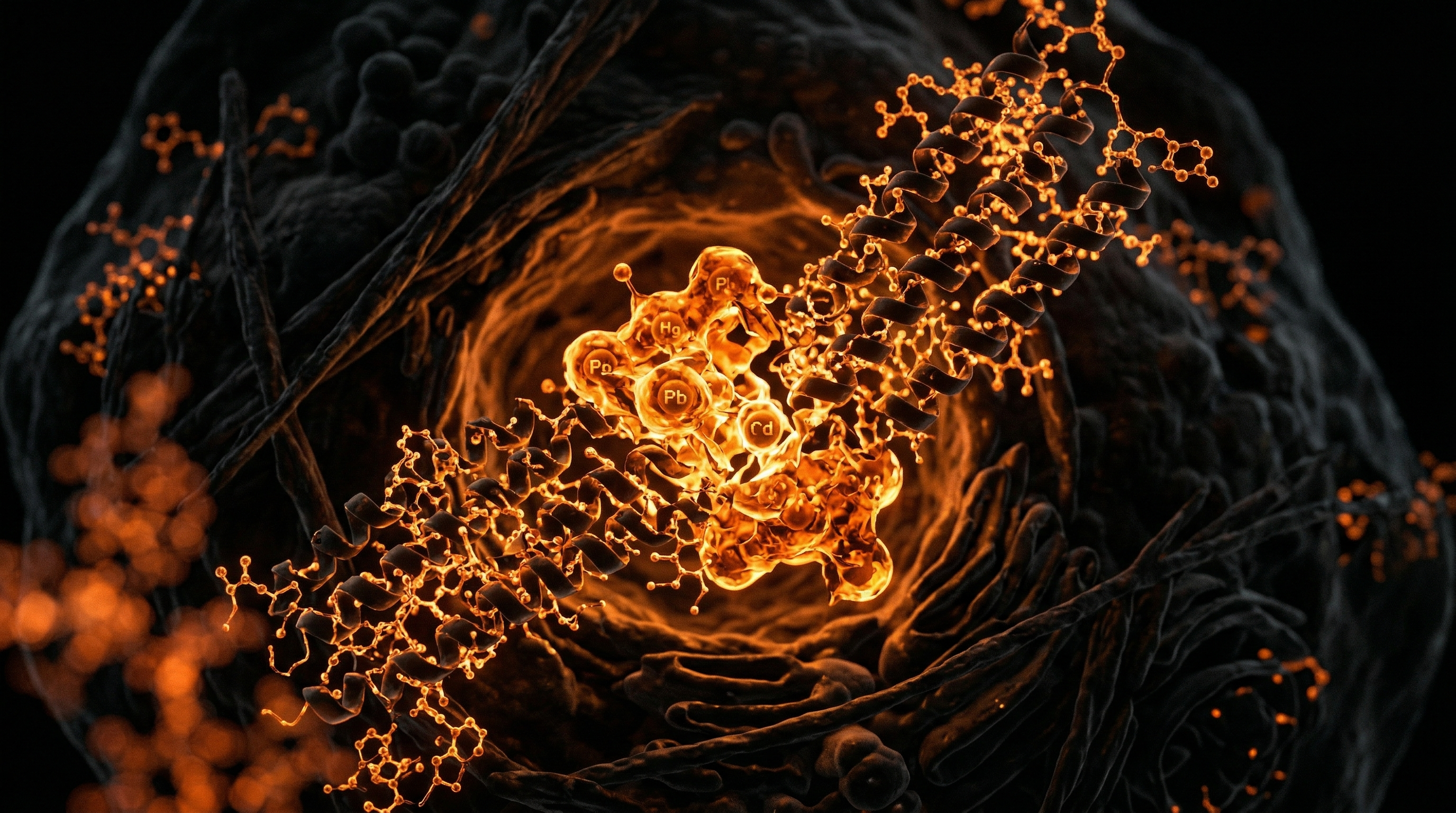
Heavy metals — including mercury, lead, cadmium, arsenic, aluminium, and nickel — are dense metallic elements that accumulate in biological tissues because they lack metabolic pathways for excretion and have a high affinity for the sulphur-containing compounds found on essential enzymes and structural proteins throughout the body. Exposure routes are ubiquitous in modern Britain: mercury from dental amalgam fillings and contaminated fish, lead from old water pipes and contaminated soils in urban areas, cadmium from cigarette smoke and non-organic vegetables grown on phosphate-fertilised soils, arsenic from contaminated water and rice, and aluminium from cookware, antiperspirants, food additives (E173, E554), and atmospheric aerosols. Individually toxic, heavy metals interact synergistically — producing biological harm at combined exposures far below levels considered individually dangerous — and accumulate progressively over decades in the brain, bone, kidney, and liver, where they displace essential minerals, inhibit enzymes, generate oxidative stress, and drive the chronic disease conditions that now dominate NHS waiting lists.
Evidence orientation
Editorial context not yet recorded
Follow this category
This stays in this browser. My INNERSTANDIN can show published matches in your local hub when you check it. It does not send email, push, or alert notifications.
Local learning review
A private browser aid for revisiting ideas. It is not an alert or a health recommendation.
Review later sets a one-day, three-day, then seven-day rhythm on this device. Choose it only when you want to revisit this article.
Overview
The paradigm of modern environmental toxicology is undergoing a profound shift, moving away from the historical focus on acute, high-dose lethality toward the more insidious reality of chronic, low-dose bioaccumulation. At INNERSTANDIN, we recognise that heavy metals—specifically non-essential elements such as lead (Pb), mercury (Hg), cadmium (Cd), and arsenic (As)—represent a silent, systemic threat to human homeostasis. These elements are characterised by high atomic weights and a density at least five times that of water, yet their biological significance lies in their persistence. Unlike organic pollutants that may undergo metabolic degradation, heavy metals are elemental; they cannot be broken down. Instead, they sequester within the skeletal matrix, renal parenchyma, and central nervous system, boasting biological half-lives that span decades.
The primary mechanism of heavy metal pathogenicity is the induction of catastrophic oxidative stress. These metals act as potent catalysts for the formation of reactive oxygen species (ROS) through Fenton-like reactions. By depleting endogenous antioxidant reservoirs—most notably the tripeptide glutathione—and inhibiting key enzymes such as superoxide dismutase (SOD) and catalase, these metals induce a state of chronic redox imbalance. Research published in The Lancet Planetary Health underscores that this oxidative burden is not localised but systemic, driving the underlying pathophysiology of cardiovascular disease, neurodegeneration, and metabolic syndrome.
Furthermore, the concept of "molecular mimicry" allows these xenobiotics to hijack essential biological pathways. Heavy metals possess a high affinity for sulphur-containing ligands, particularly the thiol (-SH) groups on proteins and enzymes. By substituting for essential divalent cations—such as lead displacing calcium (Ca2+) or cadmium replacing zinc (Zn2+)—these metals disrupt enzymatic cofactors, compromise signal transduction, and alter gene expression. In the UK context, where industrial legacy and food-chain contamination persist, the "total body burden" of these metals often remains below traditional clinical thresholds for "poisoning," yet far exceeds the physiological capacity for repair. This subclinical accumulation is now definitively linked to the rising incidence of chronic kidney disease (CKD) and idiopathic hypertension, as these metals trigger endothelial dysfunction and the activation of the renin-angiotensin-aldosterone system (RAAS).
At INNERSTANDIN, we assert that the current regulatory frameworks often fail to account for the synergistic toxicity of multiple metal exposures. The "Invisible Accumulation" is not merely an environmental footnote; it is a primary driver of the global chronic disease epidemic, necessitating a radical reappraisal of how we assess biological terrain and cellular integrity in the 21st century.
The Biology — How It Works
The molecular pathogenesis of heavy metal toxicity is characterised by a sophisticated form of biochemical subterfuge, where non-essential elements exploit the body's existing transport mechanisms to achieve systemic infiltration. At the core of this "invisible accumulation" is the principle of molecular mimicry. Divalent and trivalent metal cations, such as lead ($Pb^{2+}$), cadmium ($Cd^{2+}$), and mercury ($Hg^{2+}$), possess atomic radii and coordination geometries that allow them to masquerade as essential micronutrients. Lead, for instance, is a potent mimic of calcium ($Ca^{2+}$). By hijacking calcium-dependent signalling pathways, lead gains entry to the central nervous system via the blood-brain barrier’s transport proteins, subsequently interfering with neurotransmitter release and displacing calcium from hydroxyapatite structures in bone, creating a lifelong endogenous reservoir of toxicity.
The disruption of enzymatic function represents a primary pillar of heavy metal pathology. Many of these metals exhibit an extreme affinity for sulphydryl (-SH) groups, particularly those found within the cysteine residues of vital enzymes and structural proteins. When mercury or arsenic binds to these thiol groups, they induce irreversible conformational changes, effectively deactivating the enzyme. This is particularly catastrophic in the context of the mitochondria. Research published in The Lancet Planetary Health highlights how environmental cadmium exposure inhibits the enzymes of the citric acid cycle and the electron transport chain, leading to a precipitous decline in ATP production and the triggering of mitochondrial-mediated apoptosis.
Furthermore, heavy metals serve as catalysts for the generation of reactive oxygen species (ROS) through Fenton-like reactions. While redox-active metals like iron and copper are essential in trace amounts, their dysregulation—or the presence of xenobiotic metals like nickel—promotes the formation of the highly reactive hydroxyl radical ($OH$). This initiates a cascade of lipid peroxidation, particularly within the polyunsaturated fatty acids of cellular membranes, compromising cellular integrity. Simultaneously, these metals deplete the body’s primary antioxidant, glutathione (GSH), by binding to its sulphur atom or inhibiting glutathione peroxidase. This state of chronic oxidative stress is a hallmark of the INNERSTANDIN perspective on chronic disease, as it underpins the systemic inflammation seen in British cohorts suffering from cardiovascular and neurodegenerative pathologies.
Beyond direct structural damage, we must address the epigenetic interference. Evidence from PubMed-indexed studies suggests that metals like arsenic and cadmium act as "metalloestrogens," binding to oestrogen receptors and disrupting endocrine homeostasis. More insidiously, they alter DNA methylation patterns and histone acetylation. By inhibiting DNA methyltransferases, heavy metals can cause the hypomethylation of oncogenes or the hypermethylation of tumour suppressor genes, providing a direct mechanistic link between environmental accumulation and the rising rates of complex chronic illnesses in the UK. This is not merely toxicity; it is a fundamental rewiring of human biological expression.
Mechanisms at the Cellular Level
To reach a profound INNERSTANDIN of heavy metal pathogenesis, one must look beyond macro-symptomatology and interrogate the subversive molecular hijackings occurring within the intracellular environment. The primary mechanism of heavy metal toxicity—specifically regarding lead (Pb), cadmium (Cd), mercury (Hg), and arsenic (As)—is the induction of chronic oxidative stress through the depletion of endogenous antioxidants and the catalytic generation of reactive oxygen species (ROS). Unlike organic toxins, these elemental metals are non-biodegradable, allowing them to persist within the cellular matrix and initiate the Fenton-type reactions.
Research published in The Lancet Planetary Health highlights that even at sub-clinical concentrations, these metals disrupt the delicate redox equilibrium. For instance, Cadmium exhibits a high affinity for the thiol groups in glutathione (GSH), the cell’s primary antioxidant. By sequestering GSH, Cadmium leaves the cell vulnerable to lipid peroxidation, which compromises the integrity of the mitochondrial and plasma membranes. This is not merely a transient stressor; it is a fundamental shift in cellular bioenergetics. When the mitochondrial membrane potential collapses, the electron transport chain is decoupled, leading to a deficit in adenosine triphosphate (ATP) production—the very energy currency required for cellular repair and detoxification.
Furthermore, the mechanism of 'ionic mimicry' represents one of the most insidious threats to human biology. Heavy metals are molecular doppelgängers; they possess the atomic radius and charge density to displace essential divalent and monovalent cations such as Calcium (Ca2+), Zinc (Zn2+), and Iron (Fe2+). In the UK, historical exposure to lead from Victorian-era piping and industrial legacy has long-term implications because Pb2+ acts as a surrogate for Ca2+. Lead competes for the binding sites on calmodulin and protein kinase C, effectively derailing intracellular signalling cascades and neurotransmitter release. This displacement isn't limited to the cytoplasm; it extends to the nucleus. Lead and Cadmium can replace Zinc in 'zinc-finger' protein motifs, which are critical for DNA transcription and repair. When these motifs are occupied by a toxic metal, the cell’s ability to rectify DNA damage is inhibited, promoting the genomic instability that underpins many chronic oncogenic and degenerative conditions.
The epigenetic landscape is equally compromised. Evidence sourced from PubMed indicates that arsenic and mercury alter DNA methylation patterns and histone acetylation. These metals inhibit DNA methyltransferases (DNMTs), leading to the hypomethylation of proto-oncogenes or the hypermethylation of tumour suppressor genes. This 'invisible' accumulation does not just damage the cell; it rewires the cellular software, ensuring that the legacy of toxic exposure is propagated through subsequent cellular generations. At INNERSTANDIN, we recognise that this cellular sabotage is the silent driver behind the UK’s escalating rates of metabolic and neurodegenerative decline, necessitating a total paradigm shift in how we view environmental bioaccumulation.
Environmental Threats and Biological Disruptors
The insidious nature of heavy metal accumulation represents a profound shift in the anthropogenic landscape of human pathology, where the biological equilibrium is systematically dismantled by non-essential elements. In the United Kingdom, the legacy of the industrial revolution, coupled with modern agricultural runoff and atmospheric deposition, has created a persistent environmental reservoir of Lead (Pb), Cadmium (Cd), Mercury (Hg), and Arsenic (As). At INNERSTANDIN, we recognise that these are not merely external pollutants but are active biological disruptors that integrate themselves into the very architecture of cellular function through the mechanism of molecular mimicry.
The primary pathogenic driver of heavy metals is their ability to exploit the body's transport systems for essential minerals. Through cationic mimicry, divalent metal ions such as Pb2+ and Cd2+ compete for the same binding sites and transporters intended for Calcium (Ca2+), Magnesium (Mg2+), and Zinc (Zn2+). Research published in The Lancet Planetary Health underscores that even at sub-toxic concentrations, this displacement inhibits critical enzymatic activities. For instance, Lead's high affinity for the sulfhydryl groups in delta-aminolevulinic acid dehydratase (ALAD) severely impairs heme synthesis, a process fundamental to mitochondrial respiration and oxygen transport. This is not a transient toxicity; it is a permanent metabolic hijacking that redirects cellular energy toward futile attempts at detoxification.
Furthermore, the induction of oxidative stress serves as a central pillar of metal-induced morbidity. Heavy metals act as potent catalysts for Fenton-like reactions, generating an unmanageable flux of Reactive Oxygen Species (ROS). Unlike physiological ROS, which serve as signalling molecules, metal-induced radicals lead to the depletion of the endogenous antioxidant pool, specifically sequestering glutathione (GSH) and inhibiting superoxide dismutase (SOD). This chronic electrophilic stress results in lipid peroxidation of mitochondrial membranes, particularly within high-metabolic-demand tissues such as the myocardium and the prefrontal cortex. Evidence from UK-based longitudinal cohorts suggests a direct correlation between Cadmium accumulation—largely via tobacco smoke and dietary uptake in phosphate-fertilised crops—and the onset of endothelial dysfunction, as the metal disrupts nitric oxide bioavailability, precipitating hypertensive and atherosclerotic phenotypes.
The epigenetic implications are equally concerning. Heavy metals have been shown to alter DNA methylation patterns and histone acetylation, effectively silencing tumour suppressor genes while activating oncogenic pathways. This ‘invisible’ accumulation drives chronic disease by altering the transcriptional landscape long before clinical symptoms manifest. Within the INNERSTANDIN framework, we identify these metals as primary drivers of the 'toxic load' that defines modern chronic illness, moving beyond symptomatic observation into the rigorous deconstruction of the molecular interference that defines the 21st-century environmental threat.
The Cascade: From Exposure to Disease
The transition from environmental exposure to systemic pathology is not a discrete event but a protracted molecular siege. In the United Kingdom, despite the mitigation of legacy industrial plumes, the population remains subject to low-dose, chronic exposure via ageing infrastructure (lead piping), dietary accumulation (mercury in apex predators), and atmospheric particulate matter (cadmium and nickel from brake wear and industrial bypass). At INNERSTANDIN, we recognise that the primary driver of this cascade is the principle of molecular mimicry—the process by which non-essential, toxic metals exploit the transport mechanisms intended for vital nutrients.
Xenobiotic metals, particularly lead ($Pb^{2+}$), cadmium ($Cd^{2+}$), and mercury ($Hg^{2+}$), possess atomic radii and valency states that allow them to masquerade as essential divalent cations such as calcium, zinc, and magnesium. When these metals enter the systemic circulation, they are sequestered by specific transport proteins, such as divalent metal transporter 1 (DMT1), facilitating their entry into the intracellular environment. Once inside, the biochemical havoc begins with the depletion of the thiol-containing antioxidant pool. Research published in The Lancet Planetary Health and archived via PubMed highlights that heavy metals have an overwhelming affinity for sulfhydryl (-SH) groups. This leads to the irreversible inhibition of glutathione peroxidase and superoxide dismutase, the body’s primary enzymatic defences.
This depletion triggers a state of chronic, unmitigated oxidative stress. Through Fenton-like and Haber-Weiss reactions, metals like iron and copper—when displaced from their chaperone proteins by toxins—catalyse the production of hydroxyl radicals. These radicals induce lipid peroxidation of the mitochondrial membrane, compromising the electron transport chain and resulting in a catastrophic drop in ATP production. The result is a cellular energy crisis that underpins the chronic fatigue and metabolic dysfunction seen in environmental illness.
Furthermore, the cascade extends to the genomic level. Heavy metals are potent epigenetic modifiers. As documented in numerous peer-reviewed studies, arsenic and chromium induce dysregulation by modulating DNA methyltransferases. This leads to the silencing of tumour suppressor genes and the activation of proto-oncogenes long before clinical symptoms manifest. In the UK context, where multi-morbidity is rising, the synergistic effect of these metals cannot be overstated; for instance, the presence of cadmium significantly potentiates the neurotoxicity of lead by disrupting the blood-brain barrier’s integrity.
The bioaccumulative nature of these toxins means they are not merely transient irritants but permanent physiological burdens. Lead, for example, is preferentially deposited in the hydroxyapatite crystal of the bone, where it has a half-life of decades. During periods of bone resorption, such as ageing or menopause, this sequestered lead is remobilised into the blood, triggering secondary exposure events that accelerate neurocognitive decline and cardiovascular stiffening. This "invisible accumulation" represents a silent transition from sub-clinical cellular dysfunction to overt chronic diseases—nephropathy, neurodegeneration, and hypertension—that currently dominate the clinical landscape. Understanding this cascade is essential for moving beyond symptomatic treatment toward true biological resolution.
What the Mainstream Narrative Omits
The prevailing clinical paradigm in the United Kingdom remains tethered to an antiquated model of acute toxicology, whereby heavy metal intervention is only deemed necessary upon the presentation of overt, life-threatening symptoms associated with high-dose exposure. At INNERSTANDIN, we recognise that this reductive approach ignores the insidious reality of the 'body burden'—the cumulative, low-dose accretion of non-essential elements that recalibrates human physiology toward chronic senescence. The mainstream narrative omits the fact that there is no biological 'threshold' for safety regarding metals like lead (Pb), mercury (Hg), and cadmium (Cd); rather, these elements exert adverse effects via molecular mimicry and the systematic displacement of essential nutritional cations.
Central to this subterranean pathological drive is the mechanism of ionic interference. Cadmium, for instance, possesses an ionic radius nearly identical to that of zinc (Zn2+). Consequently, cadmium subverts zinc-dependent enzymes and transcription factors, such as zinc fingers, which are critical for DNA repair and gene expression. Research published in The Lancet Planetary Health underscores that even at concentrations currently deemed 'acceptable' by regulatory bodies, the displacement of zinc leads to the inhibition of poly(ADP-ribose) polymerase 1 (PARP-1), effectively crippling the cell's ability to repair double-strand DNA breaks. This is not merely 'pollution'; it is an engineered state of genomic instability.
Furthermore, the mainstream discourse frequently overlooks the synergistic mitotoxicity of these metals. While mercury is known to deplete intracellular glutathione—the master antioxidant—it simultaneously binds to the thiol groups of mitochondrial membrane proteins. This disruption of the electron transport chain (ETC) increases the leakage of reactive oxygen species (ROS), particularly superoxide radicals, leading to a state of chronic oxidative stress that conventional pathology misidentifies as 'idiopathic' inflammation. In the UK, historical lead piping and atmospheric deposition from legacy industries mean that the average Briton carries a multi-generational legacy of Pb2+ in their hydroxyapatite matrix (bone tissue). Lead does not remain inert; it replaces calcium (Ca2+), particularly during periods of high metabolic turnover such as menopause or pregnancy, leaching back into the bloodstream to act as a potent neurotoxin and hypertensive agent by inhibiting nitric oxide synthase.
INNERSTANDIN posits that the current diagnostic reliance on blood serum testing is fundamentally flawed, as it only reflects recent exposure. The true driver of chronic disease is the sequestered fraction—the metals stored within the parenchyma of the liver, kidneys, and the central nervous system. By failing to account for this bioaccumulation and the subsequent epigenetic silencing of protective genes, the mainstream narrative fails the patient, leaving the foundational cause of modern metabolic and neurodegenerative epidemics largely unaddressed.
The UK Context
In the United Kingdom, the silent crisis of heavy metal toxicity is underpinned by a dual-layered reality: a legacy of Victorian-era industrialism and contemporary urban environmental degradation. Unlike acute poisoning scenarios, the UK’s burden is characterised by "low-dose, chronic bioaccumulation," a phenomenon INNERSTANDIN identifies as a primary driver of sub-clinical pathology and the long-term erosion of physiological resilience.
Lead (Pb) remains a ubiquitous threat despite the 1999 ban on leaded petrol. Research published in The Lancet Public Health and longitudinal data from the UK Biobank suggest that even blood lead levels previously deemed "safe" correlate with increased cardiovascular mortality and cognitive decline in adult populations. In the UK, the persistence of lead piping in older housing stock—particularly in the North of England and Scotland—facilitates the leaching of divalent cations that mimic calcium ($Ca^{2+}$) at the molecular level. This molecular mimicry allows Pb to bypass the blood-brain barrier via the DMT1 (Divalent Metal Transporter 1) pathway, where it disrupts glutamatergic neurotransmission and induces proteotoxic stress by displacing essential metal cofactors in enzyme active sites.
Regional hotspots, such as the historic mining districts of Cornwall and Derbyshire, exhibit elevated soil concentrations of Arsenic (As) and Cadmium (Cd). Cadmium is a potent metalloestrogen; its ability to displace Zinc ($Zn^{2+}$) in zinc-finger proteins leads to impaired DNA repair mechanisms and genomic instability. Evidence indicates that environmental ingestion via UK-grown root vegetables and cereal crops is a significant, yet overlooked, vector. At the cellular level, Cadmium-induced inhibition of the antioxidant enzyme superoxide dismutase (SOD) creates a state of chronic oxidative debt, manifesting in the UK’s rising incidence of renal dysfunction and metabolic syndrome.
Furthermore, the UK’s urban centres face a distinct metallurgical profile derived from particulate matter (PM2.5) and brake wear. Research conducted at King’s College London has highlighted the prevalence of transition metals such as Iron (Fe), Vanadium (V), and Nickel (Ni) in the London Underground and major arterial roads. These metals catalyse Fenton-like reactions within the pulmonary alveoli, generating hydroxyl radicals that trigger systemic pro-inflammatory cascades (IL-6, TNF-α). This persistent systemic inflammation is a precursor to the UK’s escalating rates of neurodegenerative decline. At INNERSTANDIN, we argue that current UK regulatory frameworks fail to account for the synergistic toxicity of these metal mixtures, which exacerbate the multi-organ dysfunction driving the modern chronic disease epidemic. The UK context is not merely one of historical pollution, but of a contemporary biological siege.
Protective Measures and Recovery Protocols
The systemic mitigation of heavy metal toxicity requires a sophisticated, multi-layered approach that transcends the simplistic 'detox' narratives prevalent in mainstream wellness circles. At INNERSTANDIN, we recognise that recovery from chronic accumulation—particularly regarding lead (Pb), mercury (Hg), cadmium (Cd), and arsenic (As)—demands an understanding of biochemical antagonism and the kinetics of chelation. In the UK context, where legacy lead piping and industrial soil contamination remain pervasive, the first line of defence is the rigorous optimisation of endogenous detoxification pathways, specifically the induction of metallothioneins and the upregulation of the Nrf2 (Nuclear factor erythroid 2-related factor 2) signalling pathway.
Effective recovery protocols must prioritise nutritional antagonism, a mechanism where essential minerals compete with toxic metals for the same binding sites on enzymes and transport proteins. For instance, selenium (Se) exhibits a profound high-affinity binding to mercury, forming an inert mercuric selenide (HgSe) complex that effectively neutralises the metal's neurotoxic potential. Research published in The Lancet and various toxicology journals underscores that sub-clinical selenium deficiency significantly exacerbates the pro-oxidative damage of mercury in the central nervous system. Similarly, the maintenance of optimal zinc-to-copper ratios is critical; zinc induces the synthesis of metallothionein, a low-molecular-weight, cysteine-rich protein that sequesters cadmium and copper, preventing their interference with mitochondrial respiration.
The secondary phase of recovery involves the strategic use of chelating agents and binders to address the 'body burden' sequestered in deep tissues, such as cortical bone and adipose tissue. Synthetic chelators like EDTA (Ethylenediaminetetraacetic acid) and DMSA (Dimercaptosuccinic acid) are potent, yet they carry the risk of 'redistribution'—the mobilisation of metals from stable stores into the systemic circulation and, potentially, across the blood-brain barrier. To mitigate this, a high-density protocol must incorporate gastrointestinal binders such as clinoptilolite zeolite and modified citrus pectin. These agents act within the enterohepatic circulation to intercept biliary-secreted metals, preventing their reabsorption—a process known as the 'recirculation trap.'
Furthermore, the bio-transformation of metals is heavily dependent on the methyl donor pool. The methylation cycle, facilitated by folate and B12, is essential for the production of glutathione (GSH), the body’s premier endogenous antioxidant. Heavy metals deplete GSH by catalysing the Fenton reaction, leading to the proliferation of reactive oxygen species (ROS). Evidence-led recovery must, therefore, include precursors such as N-acetyl cysteine (NAC) and alpha-lipoic acid (ALA), the latter being uniquely capable of crossing the blood-brain barrier to chelate intracellular mercury. At INNERSTANDIN, we assert that without restoring the redox potential of the cell, any attempt at heavy metal removal will result in heightened systemic inflammation and secondary tissue damage. Final recovery stages must utilise low-temperature infrared thermogenesis to facilitate the excretion of cadmium and lead via the eccrine glands, bypassing the often-compromised renal filtration systems. This holistic, biochemically-precise framework is the only viable path to reversing the insidious trajectory of metal-driven chronic disease.
Summary: Key Takeaways
The bioaccumulation of non-essential heavy metals—principally lead (Pb), cadmium (Cd), mercury (Hg), and arsenic (As)—constitutes a silent, systemic driver of multi-organ dysfunction that bypasses conventional diagnostic thresholds. At a molecular level, these elements exert pathogenicity through high-affinity binding to thiol (sulfhydryl) groups, effectively inactivating critical enzymes and structural proteins. Research indexed in PubMed and The Lancet underscores the "molecular mimicry" mechanism, whereby toxic cations displace essential divalent metals like zinc (Zn) and calcium (Ca), disrupting calcium signalling, metallo-enzymatic catalysis, and mitochondrial bioenergetics. In the UK, legacy industrial exposure and ageing infrastructure remain significant vectors for chronic, low-dose xenobiotic accumulation.
Data suggests that the resulting oxidative stress, mediated by the generation of reactive oxygen species (ROS) and the depletion of endogenous glutathione stores, fosters a pro-inflammatory milieu conducive to neurodegeneration, cardiovascular stiffness, and endocrine disruption. Furthermore, epigenetic modulation via DNA methylation changes—often observed in longitudinal cohort studies—confirms that these environmental stressors alter gene expression long after initial exposure. INNERSTANDIN maintains that acknowledging this bio-persistent burden is essential for decoding the escalating prevalence of idiopathic chronic diseases. The evidence is irrefutable: heavy metal sequestration in bone and soft tissue represents a lifelong "toxic debt" that compromises physiological resilience and genomic stability.
This article is provided for informational and educational purposes only. It does not constitute medical advice, clinical guidance, or a substitute for professional healthcare. Information reflects cited research at time of publication. Always consult a qualified healthcare professional before acting on any health information.
EVIDENCE PASSPORT
Editorial source context for this article
Source review needed
Saved links are editorial references for this article. They may support specific claims rather than every sentence. Open and assess each source in context. This passport does not independently verify them.
Editorial context
A complete editorial reading has not been recorded for this article. Source links remain available for you to open and assess directly.
Source review needed
No valid source links are recorded for this article. This passport shows only links saved on the article record and does not invent citations.
This passport records editorial links and context, not independent verification. Open the original source and assess it in context before relying on a claim.
Medical Disclaimer
The information in this article is for educational purposes only and does not constitute medical advice, diagnosis, or treatment. Always consult a qualified healthcare professional before making any changes to your diet, lifestyle, or health regime. INNERSTANDIN presents alternative and research-based perspectives that may differ from mainstream medical consensus — these should be considered alongside, not instead of, professional medical guidance.
Read Full DisclaimerContinue the thread
Keep this question moving.
Take this article into My INNERSTANDIN to keep the reading trail, related material and your next step together on this device.
Explore this in the Body Map
See where this hits your biology. Interactive anatomy, threats, and protective protocols.
Dig deeper in the Library
Free, longform PDF volumes that go beyond headlines into mechanisms and references.