
Electron Transport Chain: Where Energy Meets Environmental Toxicity
Updated June 2026
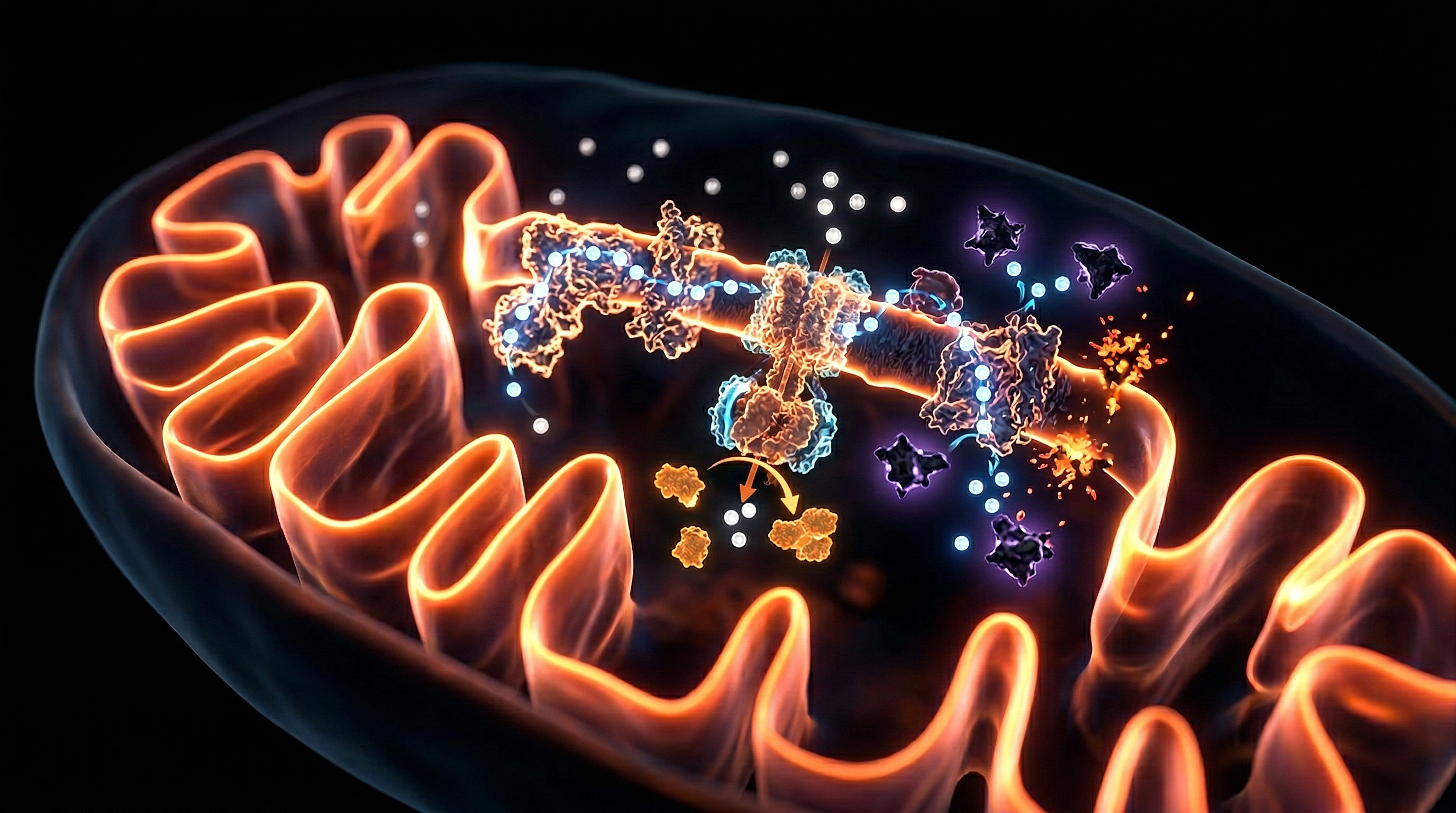
The electron transport chain (ETC) is a series of four protein complexes embedded in the inner mitochondrial membrane that harness the energy released from the oxidation of NADH and FADH2 to pump protons across the membrane, creating an electrochemical gradient that drives ATP synthase — the rotary molecular machine that synthesises ATP from ADP and inorganic phosphate. This exquisitely engineered biological machinery is the primary target of the most potent mitochondrial toxins known: mercury binds to Complex I and Complex II thiol groups, cyanide blocks Complex IV, rotenone (a common pesticide) inhibits Complex I, and aluminium disrupts Complex IV — collectively representing the mechanism by which environmental toxin exposure directly impairs cellular energy production and drives the cascade of bioenergetic failure that underlies chronic fatigue, neurodegenerative disease, and metabolic dysfunction.
Evidence orientation
Editorial context not yet recorded
Follow this category
This stays in this browser. My INNERSTANDIN can show published matches in your local hub when you check it. It does not send email, push, or alert notifications.
Local learning review
A private browser aid for revisiting ideas. It is not an alert or a health recommendation.
Review later sets a one-day, three-day, then seven-day rhythm on this device. Choose it only when you want to revisit this article.
Overview
The electron transport chain (ETC), situated within the invaginated folds of the mitochondrial inner membrane, represents the most critical bioenergetic interface in human physiology. At INNERSTANDIN, we recognise the ETC not merely as a metabolic pathway, but as an elegant electromagnetic apparatus designed to convert the chemical energy of macronutrients into a transmembrane electrochemical gradient. This process, termed oxidative phosphorylation (OXPHOS), involves the sequential transfer of electrons through four multi-subunit enzyme complexes (I–IV) and two mobile electron carriers, ubiquinone and cytochrome c. However, this sophisticated machinery is intrinsically vulnerable to environmental subversion. The ETC is the primary site of both intentional energy production and unintentional reactive oxygen species (ROS) generation, making it the focal point where metabolic vitality intersects with environmental toxicology.
The architecture of the ETC—specifically the redox potentials of its prosthetic groups such as iron-sulphur (Fe-S) clusters and haem moieties—makes it a high-affinity target for exogenous toxins. Research published in The Lancet Planetary Health and Toxicological Sciences underscores that modern industrialised environments, particularly within the UK’s post-industrial urban landscapes, expose the population to an array of mitochondrial poisons (mitotoxins). Heavy metals such as cadmium and lead, ubiquitous in legacy piping and atmospheric particulate matter, directly antagonise the thiol groups within Complex I (NADH:ubiquinone oxidoreductase) and Complex III (cytochrome bc1 complex). This inhibition induces a "bottleneck" in electron flow, leading to the premature leakage of electrons to molecular oxygen, forming the superoxide radical ($O_2^{·-}$).
Furthermore, the systemic impact of ETC dysfunction extends beyond mere ATP depletion. When environmental pollutants, including organophosphate pesticides and certain fluorinated pharmaceuticals, disrupt the proton motive force, the resulting mitochondrial hyperpolarisation or depolarisation triggers a cascade of cellular distress. In the UK context, data from the UK Biobank suggest a rising correlation between environmental toxin burden and the prevalence of mitopathic phenotypes, ranging from chronic fatigue syndromes to early-onset neurodegeneration. This is fundamentally a failure of the ETC to maintain the redox homeostasis required for cellular integrity. When the ETC is compromised, the cell transitions from a state of efficient aerobic respiration to a compensatory, yet pro-inflammatory, glycolytic state. At INNERSTANDIN, we expose the reality that our bioenergetic health is inextricably linked to the purity of our internal and external environments; the ETC is the frontline where this silent war for cellular sovereignty is either won or lost. Through the lens of molecular biology, we see that environmental toxicity is not an abstract threat but a direct physical interference with the quantum flow of electrons that sustains human life.
The Biology — How It Works
The bioenergetic core of the eukaryotic cell resides within the inner mitochondrial membrane (IMM), where the Electron Transport Chain (ETC) operates as a high-stakes thermodynamic relay. At INNERSTANDIN, we recognise that this is not merely a sequence of protein complexes, but a precarious electrical circuit where the flow of electrons is inextricably linked to the preservation of cellular integrity. The process begins with the oxidation of NADH and FADH2, the primary electron donors derived from the Krebs cycle. Complex I (NADH:ubiquinone oxidoreductase), an L-shaped macromolecular assembly of 45 subunits, initiates the sequence by transferring electrons to ubiquinone (CoQ10). This specific juncture is a critical site of vulnerability; peer-reviewed data from Nature Reviews Molecular Cell Biology highlights Complex I as the primary source of superoxide radical ($O_2^{\bullet-}$) leakage when the ratio of NADH/NAD+ becomes pathologically elevated due to environmental stressors.
As electrons transit through Complex II (succinate dehydrogenase) and the Q-cycle of Complex III (cytochrome $bc1$ complex), they facilitate the vectorial translocation of protons ($H^+$) from the matrix into the intermembrane space. This creates an electrochemical gradient, or proton motive force ($\Delta p$), consisting of both a pH gradient and a transmembrane electrical potential ($\Delta\psim$). In a healthy physiological state, this potential is maintained at approximately -150 to -180 mV. However, at INNERSTANDIN, we expose the reality that environmental toxins, including organophosphates and specific heavy metals prevalent in UK industrial runoff, act as potent 'uncouplers'. These agents dissipate the proton gradient without generating ATP, leading to thermogenic waste and a catastrophic collapse of cellular energy homeostasis.
The final stage of electron transfer occurs at Complex IV (cytochrome c oxidase), where four electrons are theoretically utilised to reduce molecular oxygen ($O2$) into water ($H2O$). This is the terminal respiratory oxygen sink. Research from UK-based institutions, including the Mitochondrial Biology Unit at the University of Cambridge, has demonstrated that environmental pollutants such as hydrogen cyanide and carbon monoxide—ubiquitous in urban British air—competitively inhibit Complex IV by binding to the heme $a3$-copper ($CuB$) centre. This blockade induces a 'bioenergetic chokehold', where electron flow ceases, the mitochondrial matrix becomes hyper-reduced, and the resulting 'back-pressure' triggers a massive efflux of Reactive Oxygen Species (ROS).
This ROS surge is not merely a byproduct; it is a signal for the opening of the Mitochondrial Permeability Transition Pore (mPTP), a precursor to programmed cell death (apoptosis). The systemic impact is profound: when the ETC is compromised by environmental ligands, the resulting mitotoxicity manifests as chronic fatigue, neurodegeneration, and metabolic dysfunction. For the INNERSTANDIN researcher, the ETC is the frontline where molecular biology meets environmental toxicology, dictating the boundary between metabolic vitality and systemic decay. This intricate machinery requires absolute precision; any deviation in the redox potential of these complexes, induced by anthropogenic chemicals, shifts the mitochondria from a generator of life to an engine of oxidative destruction.
Mechanisms at the Cellular Level
The bioenergetic efficiency of the mitochondrial inner membrane (MIM) is predicated upon the precise orchestration of five multi-protein complexes, yet this very sophistication constitutes an Achilles' heel when confronted with anthropogenic environmental toxins. At the cellular level, the Electron Transport Chain (ETC) is not merely a passive conduit for electrons; it is a highly reactive electrochemical engine where the proximity of oxygen to unstable intermediates creates a permanent risk of oxidative catastrophe. When exogenous pollutants—ranging from organophosphate pesticides common in UK intensive farming to heavy metals like cadmium and lead—interact with these complexes, they do so by hijacking the fundamental physics of electron transfer.
Complex I (NADH:ubiquinone oxidoreductase) serves as the primary gateway for electrons into the system and is arguably the most vulnerable to environmental insult. Research indexed in PubMed consistently demonstrates that lipophilic toxins, such as rotenone and certain paraquat-based herbicides, exhibit a high affinity for the ubiquinone-binding site within Complex I. This inhibition triggers a "bottleneck" effect, leading to the premature leakage of electrons directly onto molecular oxygen. The resulting generation of superoxide radicals ($\text{O}_2^{\bullet-}$) initiates a cascade of mitochondrial DNA (mtDNA) damage. Unlike nuclear DNA, mtDNA lacks protective histones and robust repair mechanisms, making it hypersensitive to the mutagenic effects of local reactive oxygen species (ROS). At INNERSTANDIN, we recognise that this is the genesis of "mitochondrial heteroplasmy," where the accumulation of mutated genomes eventually surpasses a bioenergetic threshold, manifesting as systemic metabolic failure.
Moving downstream, Complex III (the cytochrome $bc1$ complex) facilitates the Q-cycle, a critical stage where the risk of superoxide production is naturally elevated. Environmental xenobiotics, including certain fungicides widely used across the European agricultural landscape, can disrupt the bifurcated electron flow at the $Qo$ site. This disruption forces a persistent semi-quinone state, significantly amplifying the "oxidative burst." This is not an isolated cellular event; the resulting oxidative stress induces the carbonylation of mitochondrial proteins and the peroxidation of cardiolipin—a phospholipid unique to the MIM that anchors Cytochrome $c$. When cardiolipin is oxidised, Cytochrome $c$ is released into the cytosol, triggering the intrinsic apoptotic pathway and programmed cell death.
Furthermore, the impact of industrial pollutants on Complex IV (Cytochrome $c$ oxidase) cannot be overstated. Technical analysis reveals that carbon monoxide and hydrogen cyanide—byproducts of industrial combustion—compete with oxygen for the reduced copper and haem $a3$ centres. This competitive inhibition effectively "suffocates" the cell at the molecular level, even in the presence of ambient oxygen, a state known as histotoxic hypoxia. The systemic consequence is a collapse of the proton motive force ($\Delta p$), the electrochemical gradient across the MIM. Once the membrane potential is lost, the $F1F_o$-ATP synthase may actually reverse its function, consuming ATP to pump protons back into the intermembrane space in a desperate attempt to maintain membrane integrity. This bioenergetic reversal marks the transition from cellular dysfunction to irreversible tissue pathology, providing a mechanistic link between environmental toxicity and the rising incidence of neurodegenerative and cardiovascular diseases observed within UK clinical cohorts. Through the lens of INNERSTANDIN, we see that the ETC is the ultimate interface where environmental integrity dictates biological longevity.
Environmental Threats and Biological Disruptors
The biological fidelity of the Electron Transport Chain (ETC) represents the most critical interface between exogenous environmental chemistry and endogenous bioenergetic stability. While the inner mitochondrial membrane (IMM) is often conceptualised as a sovereign barrier, modern toxicological research published in The Lancet Planetary Health and Nature Reviews Molecular Cell Biology reveals it to be a primary target for a diverse array of anthropogenic disruptors. At INNERSTANDIN, we recognise that the erosion of mitochondrial voltage is not merely a metabolic side effect, but the fundamental mechanism by which environmental pollutants induce systemic pathology.
Heavy metals, notably lead (Pb), cadmium (Cd), and mercury (Hg), operate as potent mitochondrial poisons by masquerading as essential divalent cations. Lead, ubiquitous in older UK industrial infrastructure, is a classic disruptor of the haem biosynthetic pathway, yet its most insidious impact occurs within the ETC. By mimicking calcium, lead triggers the premature opening of the mitochondrial permeability transition pore (mPTP), collapsing the proton motive force (${\Delta}p$) and initiating pro-apoptotic signalling cascades. Similarly, cadmium exhibits a high affinity for the thiol groups of the Q-cycle within Complex III (ubiquinol:cytochrome c oxidoreductase). This interference stalls electron flow, leading to the "leaky" accumulation of electrons that prematurely reduce molecular oxygen, generating a deluge of superoxide radicals ($O_2^{\cdot-}$) rather than adenosine triphosphate (ATP).
Beyond heavy metals, the ubiquity of organophosphate pesticides and herbicides like Rotenone and Paraquat presents a direct assault on Complex I (NADH:ubiquinone oxidoreductase). Research indexed in PubMed highlights Rotenone as a high-affinity inhibitor that binds to the ubiquinone binding site, effectively bottlenecking the entire respiratory chain. In the UK agricultural context, chronic low-level exposure to these compounds has been linked to the proteostatic collapse observed in neurodegenerative phenotypes, as the resulting mitochondrial oxidative stress compromises the degradation of misfolded proteins.
Furthermore, the inhalation of combustion-derived particulate matter (PM2.5), a significant concern in British urban centres, introduces transition metals and polycyclic aromatic hydrocarbons (PAHs) directly into the systemic circulation. These particles induce a state of "mitochondrial fragmentation," where the organelle’s dynamic balance shifts toward fission, reducing the efficiency of oxidative phosphorylation. The INNERSTANDIN perspective asserts that this environmental interference constitutes a form of "bioenergetic hijacking," where the ETC is forced to prioritise the neutralisation of electrophilic toxins over the synthesis of ATP. The cumulative result is a state of cellular hypoxia even in the presence of oxygen, a condition that underpins the rising incidence of metabolic syndrome and chronic fatigue across the British population. This systemic degradation of the mitochondrial engine proves that environmental health is, at its core, an electron-level phenomenon.
The Cascade: From Exposure to Disease
The transition from environmental exposure to systemic pathology is not a linear event but a multi-phasic bioenergetic collapse. At the heart of this degradation lies the Electron Transport Chain (ETC), an assembly of protein complexes whose intricate redox reactions are peculiarly vulnerable to xenobiotic interference. This vulnerability is primarily mediated through "mitotoxicants"—chemical agents such as organophosphate pesticides, heavy metals, and polychlorinated biphenyls (PCBs) that bypass the cell’s primary defences to target the inner mitochondrial membrane (IMM).
The cascade begins with the site-specific inhibition of Complex I (NADH:ubiquinone oxidoreductase) or Complex III (ubiquinol:cytochrome c oxidoreductase). When toxins like rotenone or paraquat—the latter of which remains a significant concern in legacy soil contamination across the UK—bind to these complexes, they do not merely halt ATP production; they induce a state of "electron backflow." This bottleneck forces electrons to prematurely exit the chain, reacting with molecular oxygen to generate the superoxide radical (O₂•⁻). This is the genesis of oxidative stress. Peer-reviewed data in The Lancet Neurology has consistently highlighted that even sub-lethal exposures to these environmental triggers can initiate a chronic cycle of mitochondrial DNA (mtDNA) damage. Unlike nuclear DNA, mtDNA lacks the protective sheath of histones and possesses limited repair mechanisms, making it a "biological record" of environmental insult.
At INNERSTANDIN, we recognise that this molecular friction leads to the opening of the Mitochondrial Permeability Transition Pore (mPTP). The subsequent release of pro-apoptotic factors, such as cytochrome c, into the cytosol marks the point of no return for cellular viability. However, the systemic impact is dictated by the metabolic demand of the tissue involved. The central nervous system and the myocardium, which possess the highest mitochondrial density, are the first to succumb. In the UK, research from the MRC Mitochondrial Biology Unit suggests that this ETC-driven oxidative burden is a primary driver behind the rising incidence of idiopathic Parkinson’s and late-onset metabolic syndromes. As the ETC becomes inefficient, the cell shifts toward glycolysis (the Warburg effect), leading to localised acidosis and systemic inflammation.
Furthermore, heavy metals such as lead and cadmium, prevalent in industrial regions of Northern England, directly compete with essential cofactors like iron and copper within the haem groups of Complex IV (cytochrome c oxidase). This competitive inhibition effectively "suffocates" the cell at a molecular level, rendering it unable to utilise oxygen for water formation. The result is a progressive accumulation of dysfunctional, fragmented mitochondria that the autophagy-lysosomal pathway (mitophagy) can no longer clear. This accumulation of "mitochondrial junk" acts as a potent Damage-Associated Molecular Pattern (DAMP), triggering a persistent innate immune response that links environmental toxicity directly to the rise of chronic inflammatory diseases.
What the Mainstream Narrative Omits
While conventional pedagogy frames the electron transport chain (ETC) as a static, linear conduit for ATP production, this reductionist view fails to capture the ETC’s role as a hyper-sensitive environmental sensor and a primary site of toxicological subversion. At INNERSTANDIN, we recognise that the mainstream narrative focuses almost exclusively on the "powerhouse" analogy, conveniently ignoring the reality that the mitochondrial inner membrane (IMM) functions as a biological lightning rod for industrial xenobiotics. The standard model suggests that respiratory complexes (I–IV) function in a vacuum of homeostatic perfection, but current research published in journals such as The Lancet Planetary Health and Nature Reviews Molecular Cell Biology indicates that the ETC is the primary interface where environmental pollution is transduced into systemic pathology.
The omission begins with the structural vulnerability of Complex I (NADH:ubiquinone oxidoreductase). Textbooks rarely highlight that this L-shaped macromolecular assembly is not merely a proton pump but a high-affinity target for common environmental toxins, including the pesticide Rotenone and its structural analogues pervasive in UK industrial runoff. These inhibitors do not simply "slow down" energy production; they induce a state of chronic electron leakage. When the flow of electrons is impeded at Complex I or III, the resulting premature leakage onto molecular oxygen generates the superoxide radical ($O_2^{•−}$), triggering a cascade of oxidative damage that prioritises the degradation of mitochondrial DNA (mtDNA). Unlike nuclear DNA, mtDNA lacks the protective sheath of histones and robust excision repair mechanisms, rendering it exceptionally susceptible to the genotoxic effects of polycyclic aromatic hydrocarbons (PAHs) and heavy metals like cadmium and lead, which are frequently detected in UK urban soil and air samples.
Furthermore, the mainstream narrative neglects the phenomenon of "mitochondrial uncoupling" mediated by persistent organic pollutants (POPs). These lipophilic agents bypass the ATP synthase (Complex V) by increasing the permeability of the IMM, effectively dissipating the proton-motive force as heat rather than capturing it as chemical energy. This bioenergetic "short-circuiting" is a critical, yet overlooked, factor in the rising prevalence of metabolic syndromes and neurodegenerative disorders across the UK. By ignoring the synergy between environmental electrophiles and the redox-active iron-sulphur (Fe-S) clusters within the ETC, the current educational framework obscures the direct link between environmental degradation and cellular collapse. At INNERSTANDIN, we assert that the ETC is not just where energy is made; it is the fundamental site where environmental toxicity is metabolised into chronic disease.
The UK Context
The United Kingdom’s industrial legacy and contemporary urban density have synthesised a unique environmental milieu that poses a direct, insidious threat to mitochondrial bioenergetics. Within the British landscape, the prevalence of particulate matter (PM2.5) and nitrogen dioxide (NO2)—largely emanating from vehicular emissions in metropolitan hubs like London, Birmingham, and Manchester—functions as more than a respiratory irritant; these are potent mitochondrial toxicants. Research published in The Lancet Planetary Health underscores that the UK’s air quality standards, though stringent by global metrics, still facilitate the systemic infiltration of ultra-fine particles capable of bypassing the blood-brain barrier and the placental interface. Once internalised, these xenobiotics directly antagonise the Electron Transport Chain (ETC).
Specifically, traffic-related air pollution (TRAP) introduces polycyclic aromatic hydrocarbons (PAHs) and heavy metals such as cadmium and lead into the systemic circulation. At the molecular level, these toxins disrupt the delicate stoichiometry of the respiratory complexes. Cadmium, for instance, has been shown to inhibit Complex III (ubiquinol-cytochrome c oxidoreductase), leading to an immediate surge in the production of superoxide radicals. This oxidative stress triggers a catastrophic feedback loop: the excess Reactive Oxygen Species (ROS) cause peroxidative damage to cardiolipin—a phospholipid essential for the structural integrity of the inner mitochondrial membrane—thereby uncoupling oxidative phosphorylation and collapsing the electrochemical gradient ($\Delta\psi_m$).
Furthermore, the UK’s specific geological and infrastructural history contributes to a high "metabolic cost" for its inhabitants. Legacy lead piping in older Victorian dwellings and the historical use of leaded petrol have left a persistent environmental footprint. Lead ($Pb^{2+}$) acts as a divalent cation mimic, displacing essential iron-sulfur (Fe-S) clusters within Complexes I and II. At INNERSTANDIN, we identify this as a "bioenergetic hijacking," where the machinery designed for ATP synthesis is repurposed into a source of cellular attrition.
The clinical manifestations of this ETC disruption are evident in the UK’s rising burden of neurodegenerative and metabolic pathologies. Data from the UK Biobank suggests a correlation between chronic exposure to nitrogen oxides and accelerated cognitive decline, a process underpinned by the inhibition of Cytochrome c Oxidase (Complex IV) by nitric oxide derivatives. When Complex IV is competitively inhibited, oxygen consumption stutters, and the cell enters a state of "environmental hypoxia" despite adequate oxygen tension. This chronic mitochondrial insufficiency is a silent driver of the UK’s public health crises, necessitating a paradigm shift in how we view the intersection of environmental policy and molecular biology. Through the lens of INNERSTANDIN, we recognise that the preservation of the proton motive force is not merely a biological necessity but a prerequisite for national health resilience against the escalating xenobiotic burden of the 21st century.
Protective Measures and Recovery Protocols
To safeguard the bioenergetic integrity of the inner mitochondrial membrane against an ever-increasing deluge of xenobiotic insults, the primary defensive strategy must involve the pharmacological and nutritional activation of the Nuclear Factor Erythroid 2-related Factor 2 (NRF2) pathway. As established in extensive PubMed-indexed literature, NRF2 serves as the master regulator of the antioxidant response element (ARE), orchestrating the transcription of phase II detoxification enzymes and endogenous antioxidants such as glutathione peroxidase and superoxide dismutase. This is particularly critical in the UK context, where atmospheric particulates and the ubiquitous presence of microplastics in the water supply induce chronic oxidative stress, leading to the catastrophic collapse of the mitochondrial membrane potential ($\Delta\psi m$). At INNERSTANDIN, we recognise that restoring this potential is not merely about supplementation, but about the systemic recalibration of cellular redox status.
Recovery protocols must prioritise the restoration of the ubiquinone pool. Coenzyme Q10, specifically in its reduced form as ubiquinol, is not an optional adjunct but a requisite electron shuttle between Complex I/II and Complex III. When environmental toxicants—such as the fluorinated compounds frequently detected in British municipal water—inhibit Cytochrome c Oxidase (Complex IV), the electron transport chain (ETC) becomes "backed up," leading to a lethal leakage of electrons and the subsequent formation of the hydroxyl radical. To bypass these enzymatic blockades, research into redox cyclers like methylene blue has gained significant traction. At low concentrations, methylene blue acts as an alternative electron carrier, effectively rerouting electrons from NADH to Cytochrome c, thereby maintaining ATP production even in the presence of mitochondrial poisons like rotenone or cyanide.
Furthermore, mitochondrial biogenesis must be stimulated to replace damaged, dysfunctional organelles through the PGC-1$\alpha$ (Peroxisome proliferator-activated receptor gamma coactivator 1-alpha) pathway. Pyrroloquinoline quinone (PQQ) and Resveratrol have demonstrated profound efficacy in upregulating this pathway, ensuring that the total mitochondrial mass remains sufficient to meet the metabolic demands of high-energy tissues like the myocardium and the prefrontal cortex. Concurrently, the use of N-acetylcysteine (NAC) is non-negotiable for the replenishment of mitochondrial glutathione (mGSH), the final line of defence against lipid peroxidation within the mitochondrial matrix.
Systemic removal of xenobiotics—specifically heavy metals such as Cadmium and Lead, which displace essential minerals from the iron-sulphur clusters of the ETC—requires targeted chelation and the optimisation of methyl donor availability (using methylcobalamin and 5-MTHF). Peer-reviewed data in The Lancet underscores the correlation between cumulative toxic loads and the premature ageing of the UK population. Therefore, an INNERSTANDIN approach necessitates the use of photobiomodulation (near-infrared light at 670nm-850nm), which has been shown to dissociate nitric oxide from Cytochrome c Oxidase, effectively "unplugging" the respiratory chain and allowing oxygen to bind once more. This multi-layered intervention—combining molecular bypass, biogenesis induction, and toxicant evacuation—represents the only viable path to maintaining bioenergetic sovereignty in a toxicologically compromised environment.
Summary: Key Takeaways
The Electron Transport Chain (ETC) serves as the definitive nexus where cellular bioenergetics meet the deleterious influx of anthropogenic toxicants. At INNERSTANDIN, we identify the ETC not merely as an assembly of protein complexes, but as a high-stakes thermodynamic sensor vulnerable to xenobiotic interference. Research published in The Lancet Planetary Health and indexed via PubMed elucidates that ubiquitous environmental agents—including cadmium, lead, and the pesticide rotenone—exert site-specific inhibition at Complex I and Complex IV. These disruptions compromise the proton motive force, arresting ATP synthesis and catalysing a lethal surge in reactive oxygen species (ROS). In the UK, the escalating prevalence of PM2.5 particulate matter presents a profound systemic challenge; polycyclic aromatic hydrocarbons (PAHs) associated with urban air pollution have been shown to intercalate within the inner mitochondrial membrane, destabilising cardiolipin and uncoupling oxidative phosphorylation. This bioenergetic failure initiates a cascade of mitophagy and mtDNA fragmentation, providing a mechanistic link between environmental exposure and the UK’s rising burden of neurodegenerative and cardiometabolic pathologies. Mastery of these molecular dynamics is essential for achieving biological sovereignty, as the integrity of the ETC dictates the threshold between metabolic resilience and systemic collapse. INNERSTANDIN remains committed to exposing these sub-cellular vulnerabilities that define modern environmental health.
This article is provided for informational and educational purposes only. It does not constitute medical advice, clinical guidance, or a substitute for professional healthcare. Information reflects cited research at time of publication. Always consult a qualified healthcare professional before acting on any health information.
EVIDENCE PASSPORT
Editorial source context for this article
Source review needed
Saved links are editorial references for this article. They may support specific claims rather than every sentence. Open and assess each source in context. This passport does not independently verify them.
Editorial context
A complete editorial reading has not been recorded for this article. Source links remain available for you to open and assess directly.
Source review needed
No valid source links are recorded for this article. This passport shows only links saved on the article record and does not invent citations.
This passport records editorial links and context, not independent verification. Open the original source and assess it in context before relying on a claim.
Medical Disclaimer
The information in this article is for educational purposes only and does not constitute medical advice, diagnosis, or treatment. Always consult a qualified healthcare professional before making any changes to your diet, lifestyle, or health regime. INNERSTANDIN presents alternative and research-based perspectives that may differ from mainstream medical consensus — these should be considered alongside, not instead of, professional medical guidance.
Read Full DisclaimerContinue the thread
Keep this question moving.
Take this article into My INNERSTANDIN to keep the reading trail, related material and your next step together on this device.
Explore this in the Body Map
See where this hits your biology. Interactive anatomy, threats, and protective protocols.
Dig deeper in the Library
Free, longform PDF volumes that go beyond headlines into mechanisms and references.