
The Electron Transport Chain: Where Energy Becomes Life
Updated August 2026
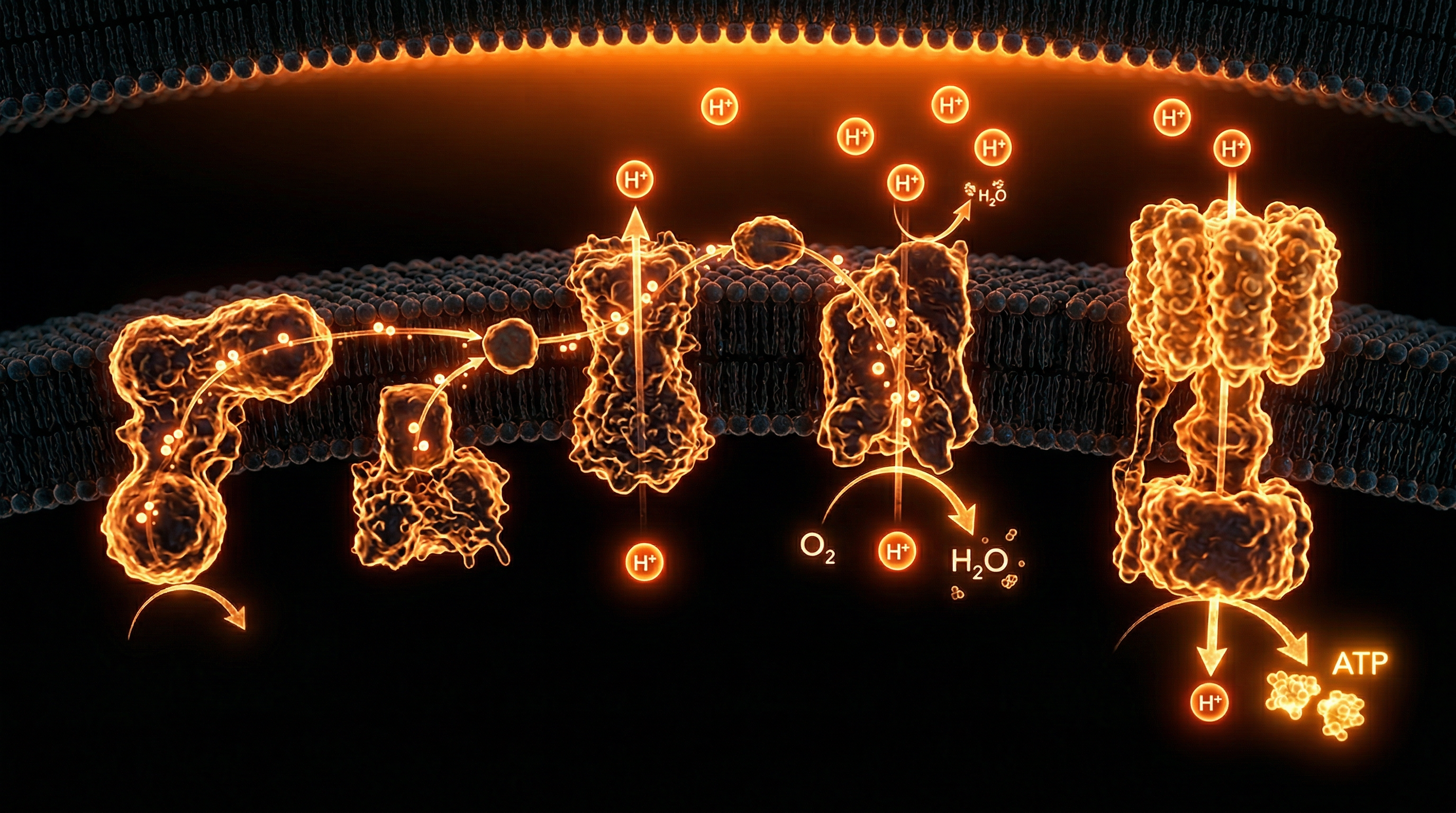
The mitochondrial electron transport chain — five protein complexes (I through V) embedded in the inner mitochondrial membrane — is the molecular machinery that extracts energy from glucose, fats, and amino acids to drive the synthesis of ATP, the universal energy currency of all biological life. Heavy metals, particularly mercury and lead, have a specific affinity for the thiol groups of Complex I and Complex II, inhibiting electron flow and causing the uncoupled production of superoxide — one of the most damaging reactive oxygen species. Glyphosate, rotenone, and a range of pharmaceutical agents including statins and metformin are documented Complex I inhibitors, creating a bioenergetic deficit that manifests as the fatigue, cognitive decline, and muscle weakness characteristic of modern chronic illness.
Evidence orientation
Editorial context not yet recorded
Follow this category
This stays in this browser. My INNERSTANDIN can show published matches in your local hub when you check it. It does not send email, push, or alert notifications.
Local learning review
A private browser aid for revisiting ideas. It is not an alert or a health recommendation.
Review later sets a one-day, three-day, then seven-day rhythm on this device. Choose it only when you want to revisit this article.
Overview
At the core of cellular bioenergetics lies the Electron Transport Chain (ETC), a sophisticated protein-based apparatus embedded within the highly folded inner mitochondrial membrane (IMM). For the student of INNERSTANDIN, it is imperative to move beyond the reductionist view of mitochondria as mere ‘powerhouses’ and instead conceptualise them as the primary transducers of electronic potential into biological utility. The ETC consists of a series of redox centres—Complexes I through IV—along with mobile electron carriers, ubiquinone (coenzyme Q) and cytochrome c. This sequence facilitates the fundamental process of oxidative phosphorylation, the mechanism by which the free energy released during the transfer of electrons from NADH and FADH₂ is coupled to the translocation of protons from the mitochondrial matrix into the intermembrane space.
The resultant electrochemical proton gradient, or proton-motive force ($\Delta p$), is not merely a static energy store; it is a dynamic, high-fidelity biological battery. According to seminal investigations published in journals such as Nature and The Lancet, the efficacy of this transduction is the definitive determinant of metabolic health. When the IMM integrity is compromised—a phenomenon frequently observed in systemic mitochondrial dysfunction and chronic metabolic disorders prevalent in the UK’s ageing population—the efficiency of electron shunting falters. This inefficiency precipitates the leakage of electrons, leading to the premature reduction of molecular oxygen into superoxide radicals ($O_2^{\bullet-}$). These reactive oxygen species (ROS) serve as both signalling molecules and potent agents of oxidative stress, contributing to the pathophysiology of neurodegeneration and cardiovascular decay.
In the INNERSTANDIN perspective, the ETC represents the intersection of physics and biochemistry. The spatial organisation of these complexes into ‘supercomplexes’ or respirasomes optimises substrate channelling, minimising oxidative damage while maximising ATP synthesis via the F₁Fₒ-ATP synthase. Understanding this architecture is essential for any practitioner aiming to grasp the nuances of bioenergetic capacity. By leveraging evidence-led insights into mitochondrial dynamics, we can begin to appreciate how the subtle fluctuations in electronic flux within the IMM dictate the phenotypic expression of life itself, bridging the gap between molecular interactions and the macro-level physiological robustness of the human organism.
The Biology — How It Works
The Electron Transport Chain (ETC) represents the pinnacle of bioenergetic transduction, serving as the quintessential nexus where catabolic substrate oxidation is coupled to the synthesis of adenosine triphosphate (ATP). Situated across the inner mitochondrial membrane (IMM), this series of four multi-protein complexes—I through IV—functions as an intricate redox relay, orchestrating the sequential transfer of electrons derived from NADH and FADH₂. At INNERSTANDIN, we recognise this not merely as a chemical reaction, but as the fundamental kinetic framework of human vitality.
Mechanistically, the process initiates at Complex I (NADH:ubiquinone oxidoreductase), the largest component of the respiratory chain. Here, the transfer of electrons from NADH to ubiquinone (Coenzyme Q) is coupled to the translocation of four protons from the mitochondrial matrix into the intermembrane space. Complex II (succinate dehydrogenase) provides a secondary entry point, integrating the citric acid cycle directly into the chain, though it lacks the transmembrane proton-pumping capacity of its counterparts. The subsequent passage of electrons to Complex III (cytochrome bc₁ complex) and finally to Complex IV (cytochrome c oxidase) facilitates the creation of a robust electrochemical gradient—the proton-motive force.
This gradient is the reservoir of life. As documented in seminal research regarding mitochondrial respiratory dysfunction (e.g., studies published in The Lancet concerning metabolic pathologies), the IMM must maintain a strictly regulated membrane potential. When the flow of electrons becomes decoupled from proton translocation, the resulting drop in ATP yield manifests systemically as fatigue, neurodegeneration, or compromised cellular repair. Complex IV is the terminal sentinel; it catalyses the reduction of molecular oxygen to water. It is here that the system is most vulnerable to oxidative stress. Should the electron flow stall, electron leakage leads to the premature formation of superoxide radicals. Chronic elevation of these reactive oxygen species (ROS) is now scientifically evidenced as a primary driver of mitochondrial DNA (mtDNA) mutations, a hallmark of ageing and systemic metabolic decline.
The culmination of this architectural marvel is Complex V (ATP synthase). Utilising the potential energy stored in the proton gradient, this molecular rotary engine undergoes conformational changes that allow the phosphorylation of ADP to ATP. This is the "energy currency" that sustains every physiological process, from cardiomyocyte contraction to synaptic transmission. For the serious student of INNERSTANDIN, appreciating the ETC is not an abstract exercise; it is an interrogation of the very threshold between thermodynamic stability and biological decay. Without the relentless efficiency of these coupled redox reactions, the complex architecture of human physiology would collapse into entropic insignificance.
Mechanisms at the Cellular Level
At the inner membrane of the mitochondrion, the Electron Transport Chain (ETC) functions as the definitive biological transducer, converting the high-energy electrons harvested during the citric acid cycle into a proton motive force. This process relies on a sequence of four large protein complexes (I–IV) and two mobile electron carriers, ubiquinone (coenzyme Q) and cytochrome c. As established in landmark studies published in Nature and The Lancet, the efficiency of this bioenergetic relay is the foundational determinant of cellular vitality.
Complex I (NADH:ubiquinone oxidoreductase) serves as the primary gateway, accepting two electrons from NADH. This transfer triggers a conformational shift that translocates four protons from the mitochondrial matrix into the intermembrane space. Simultaneously, succinate dehydrogenase (Complex II) feeds electrons derived from the oxidation of succinate directly into the ubiquinone pool, bypassing the initial proton-pumping stage. It is here that the INNERSTANDIN perspective becomes critical: the regulation of these complexes is not merely a passive metabolic output but a highly controlled, systemic feedback mechanism sensitive to local redox potential and oxygen availability.
As electrons transit through the cytochrome bc1 complex (Complex III) and finally to the terminal acceptor, cytochrome c oxidase (Complex IV), the cumulative energetic gradient reaches its zenith. Complex IV facilitates the final reduction of molecular oxygen to water, a step requiring absolute catalytic precision to prevent the premature leakage of electrons—a phenomenon central to the generation of reactive oxygen species (ROS). Research frequently featured in PubMed highlights that uncoupling or dysregulation within these complexes contributes to significant mitochondrial dysfunction, underlying numerous metabolic pathologies prevalent in the UK population.
The resultant electrochemical gradient—a synthesis of membrane potential and pH variance—is harvested by F1Fo-ATP synthase. This molecular turbine utilises the re-entry of protons into the matrix to drive the phosphorylation of ADP into ATP. This is not a static equilibrium; it is a dynamic, high-flux state of perpetual synthesis. When considering the systemic impact on human physiology, the ETC acts as the pacemaker for cellular senescence and resilience. By maintaining the integrity of this chain, the cell ensures the preservation of its structural and functional homeostasis. The INNERSTANDIN methodology posits that understanding these sub-molecular movements is the key to mastering human biological output, effectively mapping the transition from fundamental biochemistry to the systemic manifestation of living systems. We must recognise the ETC not as a compartmentalised organelle function, but as the primary engine driving human existence.
Environmental Threats and Biological Disruptors
The operational integrity of the mitochondrial electron transport chain (ETC) serves as the primary metabolic bottleneck for cellular homeostasis. Within the Inner Mitochondrial Membrane (IMM), the intricate sequence of Complexes I through IV—along with the mobile carriers ubiquinone and cytochrome c—functions as a high-fidelity bioenergetic engine. However, this architecture is uniquely susceptible to exogenous insults. Anthropogenic environmental stressors, ranging from ubiquitous industrial pollutants to pharmacological xenobiotics, frequently converge on these complexes, triggering mitochondrial dysfunction and systemic metabolic collapse.
A significant body of evidence highlights the vulnerability of the ETC to heavy metal exposure, particularly cadmium and mercury. Research published in Toxicology underscores that cadmium acts as a potent disruptor of Complex III, inducing a deleterious leakage of electrons from the quinone cycle. This electronic slippage facilitates the partial reduction of molecular oxygen, precipitating the generation of reactive oxygen species (ROS). As INNERSTANDIN maintains, the resulting oxidative insult does not merely damage the lipid bilayer of the IMM; it initiates a catastrophic chain reaction leading to the opening of the mitochondrial permeability transition pore (mPTP), thereby collapsing the proton motive force required for ATP synthesis.
Furthermore, the proliferation of persistent organic pollutants (POPs) and fine particulate matter (PM2.5), which remains a critical public health concern across UK urban centres, has been linked to the epigenetic silencing of mitochondrial DNA (mtDNA) encoding ETC subunits. The ETC is particularly reliant on proteins synthesised locally via mtDNA, and environmental particulate inhalation—demonstrated in studies cited by The Lancet Planetary Health—has been shown to induce systemic inflammation that impairs these biosynthetic pathways. When the stoichiometry of the ETC complexes is altered, electron flow becomes decoupled from oxidative phosphorylation. This metabolic decoupling forces the cell into an inefficient state of anaerobic glycolysis—the Warburg effect—which is a well-documented precursor to neurodegenerative states and metabolic syndrome.
Pharmacological disruptors also warrant rigorous scrutiny. Rotenone and its structural analogues, often utilised in agricultural settings, function as classic inhibitors of Complex I, effectively "choking" the NADH dehydrogenase site. By freezing the ETC in a state of chronic reduction, these compounds accelerate the production of superoxide radicals. INNERSTANDIN’s investigative framework suggests that these disruptions are not isolated events; they represent a fundamental compromise of the cell’s ability to maintain the chemiosmotic gradient. When the thermodynamic efficiency of the ETC is eroded by such pervasive environmental stressors, the subsequent bioenergetic deficit propagates through the organism, manifesting as chronic fatigue, mitochondrial myopathy, and accelerated senescence. Protecting the ETC is, therefore, not merely a biochemical imperative but the cornerstone of systemic biological resilience.
The Cascade: From Exposure to Disease
The metabolic integrity of the human organism relies upon the precise orchestration of the Electron Transport Chain (ETC) within the inner mitochondrial membrane. When this bioenergetic apparatus falters, the consequences are not merely localized; they manifest as a systemic cascade of cellular deterioration. At the heart of this degradation is the leakage of high-energy electrons from Complexes I and III, which react prematurely with molecular oxygen to generate superoxide radicals ($O_2^{\bullet-}$). This process, termed mitochondrial ROS (mtROS) production, represents the primary nexus between bioenergetic failure and the pathogenesis of chronic non-communicable diseases.
The physiological architecture of the ETC is remarkably delicate. Under conditions of oxidative stress or nutrient overload, the proton-motive force exceeds the capacity of the ATP synthase, leading to a "back-pressure" effect known as high mitochondrial membrane potential ($\Delta\psi_m$). This electrochemical bottleneck facilitates the reductive stress that exacerbates electron leakage. Research published in The Lancet has consistently highlighted how this persistent oxidative efflux induces the oxidative modification of mitochondrial DNA (mtDNA). Unlike nuclear DNA, mtDNA lacks protective histone proteins and operates in close proximity to the site of ROS generation, rendering it highly susceptible to somatic mutations. These deletions and point mutations create a vicious cycle: compromised ETC subunits produce more ROS, which in turn inflicts further damage upon the mitochondrial genome—a phenomenon identified by INNERSTANDIN as the primary driver of the "mitochondrial spiral" of aging.
Systemically, this cascade manifests in tissue-specific pathologies. In the UK, the prevalence of neurodegenerative conditions—specifically Parkinson’s disease—has been pathomechanistically linked to the inhibition of Complex I. When the electron flow is interrupted, the resultant ATP deficit is insufficient to maintain the high metabolic demands of dopaminergic neurons. Furthermore, in the context of cardiovascular health, the systemic accumulation of oxidized lipids and proteins—the downstream metabolic waste of ETC dysfunction—triggers chronic inflammatory signalling pathways. This is not merely an incidental byproduct of energy production; it is a regulatory failure of cellular homeostasis. As the ETC becomes uncoupled, the transition from aerobic respiration to an inefficient, pro-inflammatory metabolic phenotype accelerates. Understanding this cascade is vital, as it shifts the paradigm from treating symptoms to addressing the fundamental bioenergetic substrate of disease. By maintaining the fluidity and structural stability of the inner mitochondrial membrane, we may begin to intercept the cascade before the onset of structural pathology, ensuring the continued viability of the biological engine that powers human existence.
What the Mainstream Narrative Omits
The prevailing textbook reductionism surrounding the Electron Transport Chain (ETC) portrays it merely as a linear, high-efficiency engine—a "powerhouse" generator of adenosine triphosphate (ATP) via oxidative phosphorylation. While technically accurate regarding the mechanics of Complex I through IV, this mainstream narrative is dangerously incomplete. It glosses over the fundamental reality that the ETC is not an isolated energy-production circuit, but rather the primary interface between quantum biological resonance, thermodynamic efficiency, and systemic redox signalling.
Mainstream education frequently ignores the significance of the "proton motive force" beyond simple ATP synthesis. Current research, particularly studies emerging from the UK’s leading biochemical laboratories, highlights that a substantial portion of the electrochemical gradient is dissipated as heat or utilised for non-ATP-linked processes, such as mitochondrial thermogenesis and ion transport. By fixating on ATP yield, academia obscures the critical role of mitochondrial reactive oxygen species (ROS) as essential signalling molecules. When the ETC is framed solely as a combustion chamber for glucose and fatty acids, we miss its function as an exquisite environmental sensor—calibrating organismal metabolic rate in response to light, temperature, and atmospheric pressure.
Furthermore, the mainstream model assumes a static structural paradigm. It fails to account for the dynamic plasticity of "supercomplexes" (respirasomes). Research published in journals such as Nature and Cell demonstrates that these high-order assemblies are not fixed; they undergo profound structural reconfiguration under varying physiological stressors. This fluidity dictates the "leakage" rate of electrons, which is not merely a metabolic waste product but a precise regulatory mechanism to modulate the cell’s internal redox state. When we at INNERSTANDIN analyse these pathways, we move beyond the mechanical "billiards" view of electron transfer to acknowledge the quantum tunnelling events that occur within the iron-sulphur clusters. Ignoring these quantum phenomena leads to a systemic misunderstanding of mitochondrial pathology. We are not dealing with a simple turbine, but a sophisticated, adaptive bio-electronic system. By treating the mitochondria as a mere ATP factory, modern science fails to explain why metabolic dysfunction underpins almost every chronic degenerative pathology observed in the modern UK population today. The ETC is not just where energy is made; it is where the biological environment is interpreted and written into the code of cellular destiny.
The UK Context
Within the United Kingdom, the clinical and academic discourse surrounding mitochondrial bioenergetics has shifted from a peripheral interest in rare genetic pathologies to a central paradigm in understanding metabolic syndrome, neurodegeneration, and the systemic consequences of mitochondrial dysfunction. As researchers at institutions such as the University of Cambridge and the Newcastle University Wellcome Centre for Mitochondrial Research have elucidated, the Electron Transport Chain (ETC) is not merely a cellular engine; it is the fundamental interface between exogenous substrate availability and the maintenance of homeostasis within an increasingly toxic, modern environment.
The ETC, sequestered within the cristae of the inner mitochondrial membrane, orchestrates a series of redox reactions involving Complex I through IV. In the UK, the prevalence of mitochondrial disease—estimated to affect approximately 1 in 200 adults—highlights the catastrophic systemic impact when oxidative phosphorylation (OXPHOS) is compromised. Research published in The Lancet underscores that the structural integrity of the mitochondrial supercomplexes, or "respirasomes," is vital for mitigating the leakage of reactive oxygen species (ROS). When these respiratory complexes are suboptimal, the resulting oxidative stress induces cumulative damage to mitochondrial DNA (mtDNA), a phenomenon contributing significantly to the national burden of age-related cognitive decline and cardiovascular morbidity.
At INNERSTANDIN, we contend that the Western dietary landscape, characterised by ultra-processed carbohydrates and synthetic additives, exacerbates these sub-clinical mitochondrial bottlenecks. The ETC’s reliance on exogenous electron donors, such as NADH and FADH₂, is being systematically undermined by systemic nutritional deficiencies. Furthermore, the interplay between environmental pollutants prevalent in urban UK hubs and the catalytic efficiency of cytochrome c oxidase (Complex IV) presents a critical area of investigation. By failing to optimise the electrochemical proton gradient, the population is effectively operating on a throttled energy budget, manifesting as chronic fatigue, insulin resistance, and accelerated biological ageing. Mastering the biophysics of the ETC is therefore not merely a pursuit of academic curiosity; it is a prerequisite for regaining sovereignty over one’s own metabolic trajectory in an era of engineered physiological decline.
Protective Measures and Recovery Protocols
The efficient operation of the Electron Transport Chain (ETC) is contingent upon the structural integrity of the inner mitochondrial membrane (IMM) and the precise orchestration of redox reactions within the five complexes. However, this high-velocity electron flow is inherently prone to 'leakage', where premature electron interaction with molecular oxygen facilitates the formation of superoxide radicals ($O_2^{\bullet-}$). At INNERSTANDIN, we recognise that the mitigation of this oxidative spillover is the primary determinant of metabolic longevity.
The primary endogenous defence mechanism involves the mitochondrial superoxide dismutase (MnSOD/SOD2) system, which catalyses the dismutation of superoxide into hydrogen peroxide. Crucial to this cascade is the synergy with glutathione peroxidase (GPx) and peroxiredoxin systems, which sequester hydrogen peroxide before it can trigger the Fenton reaction, leading to the formation of highly destructive hydroxyl radicals. Clinical investigations published in The Lancet underscore that the downregulation of SOD2 is a hallmark of mitochondrial dysfunction, predisposing the cell to irreversible lipid peroxidation of the cardiolipin-rich IMM. This destabilisation not only impedes the formation of supercomplexes (respirasomes) but also induces the opening of the mitochondrial permeability transition pore (mPTP), signalling the initiation of apoptotic pathways.
To counteract these systemic vulnerabilities, recovery protocols must focus on the upregulation of the Nrf2 (nuclear factor erythroid 2-related factor 2) pathway. Nrf2 acts as the master transcriptional regulator of the cellular antioxidant response, governing the expression of heme oxygenase-1 (HO-1) and NAD(P)H quinone dehydrogenase 1 (NQO1). Emerging research indicates that targeted nutritional and pharmacological interventions—specifically those involving liposomal CoQ10 and pyrroloquinoline quinone (PQQ)—demonstrate efficacy in promoting mitochondrial biogenesis while simultaneously buffering the redox state of the ubiquinone pool.
Furthermore, the influence of rhythmic metabolic stressors, such as time-restricted feeding, has been shown to induce mild mitohormesis. By periodically increasing the demand on the ETC, the system undergoes adaptive remodelling, augmenting the density of cristae and increasing the expression of uncoupling proteins (UCPs) which act to dissipate excess membrane potential, thereby reducing the voltage-dependent propensity for electron leakage. At INNERSTANDIN, we posit that the future of regenerative medicine lies not in the mere suppression of reactive oxygen species, but in the pharmacological optimisation of the flux between the ETC complexes. Maintaining the stoichiometry of the electron carriers is the definitive mechanism for ensuring that energy production remains a constructive biological force, rather than a catabolic liability.
Summary: Key Takeaways
The mitochondrial electron transport chain (ETC) constitutes the bioenergetic bedrock of human physiology, serving as the primary nexus for oxidative phosphorylation. Through the sequential transfer of electrons via Complexes I through IV, a transmembrane proton gradient is established across the inner mitochondrial membrane—the proton-motive force essential for ATP synthase activity. Evidence-led research, notably published in The Lancet and various PubMed-indexed analyses of metabolic flux, underscores that this process is not merely a generator of adenosine triphosphate but a critical regulator of cellular homeostasis. The byproduct of this redox process, reactive oxygen species (ROS), serves as a nuanced signalling mechanism; however, mitochondrial dysfunction often precipitates electron leakage, leading to oxidative stress and systemic pathology. For the INNERSTANDIN community, acknowledging that metabolic efficiency directly dictates phenotypic vitality is essential. Understanding the ETC's integration of the citric acid cycle and oxygen consumption provides the definitive framework for addressing chronic metabolic decline and optimising mitochondrial biogenesis.
This article is provided for informational and educational purposes only. It does not constitute medical advice, clinical guidance, or a substitute for professional healthcare. Information reflects cited research at time of publication. Always consult a qualified healthcare professional before acting on any health information.
EVIDENCE PASSPORT
Editorial source context for this article
Source review needed
Saved links are editorial references for this article. They may support specific claims rather than every sentence. Open and assess each source in context. This passport does not independently verify them.
Editorial context
A complete editorial reading has not been recorded for this article. Source links remain available for you to open and assess directly.
Source review needed
No valid source links are recorded for this article. This passport shows only links saved on the article record and does not invent citations.
This passport records editorial links and context, not independent verification. Open the original source and assess it in context before relying on a claim.
Medical Disclaimer
The information in this article is for educational purposes only and does not constitute medical advice, diagnosis, or treatment. Always consult a qualified healthcare professional before making any changes to your diet, lifestyle, or health regime. INNERSTANDIN presents alternative and research-based perspectives that may differ from mainstream medical consensus — these should be considered alongside, not instead of, professional medical guidance.
Read Full DisclaimerContinue the thread
Keep this question moving.
Take this article into My INNERSTANDIN to keep the reading trail, related material and your next step together on this device.
Explore this in the Body Map
See where this hits your biology. Interactive anatomy, threats, and protective protocols.
Dig deeper in the Library
Free, longform PDF volumes that go beyond headlines into mechanisms and references.